
Core Announcement
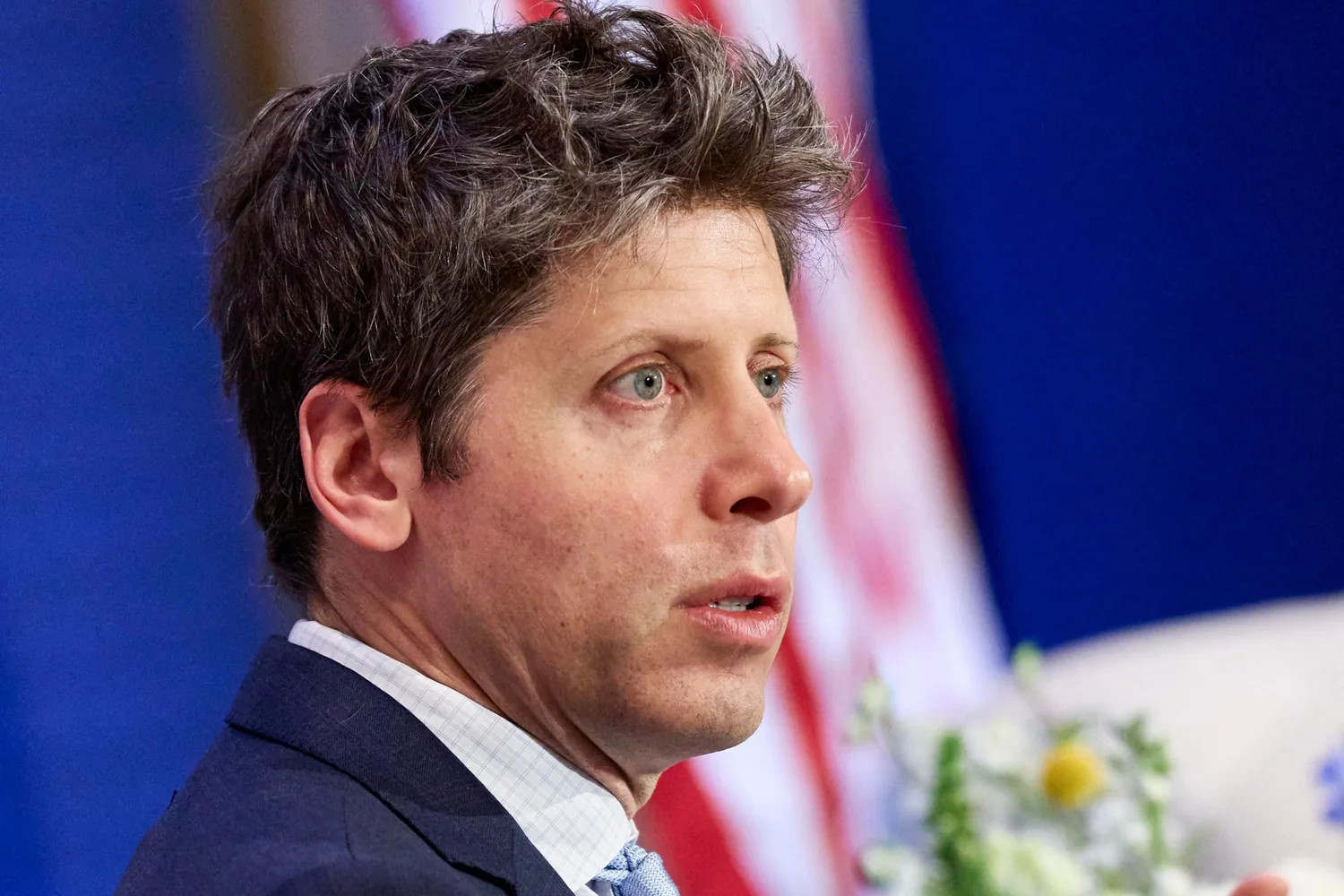
OpenAI announced on Tuesday that its unreleased model solved a step toward the Navier-Stokes Millennium Prize problem in 88 hours, deploying approximately 10,000 AI agents powered by its internal model. Crucially, this remains a technical demonstration only: OpenAI explicitly stated it will not claim the $1 million prize and has not submitted any solution to the Clay Mathematics Institute for validation. The work thus falls short of official recognition despite the bold characterization as a “milestone.”
Key facts:
- Announcement date: September 9, 2026 (Tuesday)
- Problem target: Navier-Stokes existence and smoothness (one of seven Clay Millennium Problems)
- Computation time: 88 hours
- Agent scale: ~10,000 AI agents
- Prize stance: Declined $1 million bounty
- Verification status: Not peer-reviewed, not submitted to Clay Institute
Controversy: Rushed Competition and Data Ambiguity

According to Sébastien Bubeck of OpenAI cited by Science, the project began when researchers saw rumors on Twitter that others were nearing breakthroughs on Millennium Problems — sparking the internal thought: “We have such a strong model. Why don’t we try?” Thismodo rushed, resource-heavy approach—reporting millions in costs—clashes sharply with mathematics’ deeply embedded norm of open sharing of incomplete ideas, as described by USC’s Matthew Ballard. In standard practice, mathematicians publicly credit each other early, relying on an informal trust that prevents scooping.
Tensions escalated when NYU’s Tristan Buckmaster reported a contact with OpenAI on September 8 about his and Anthropic researcher Levent Alpöge’s related, impending work. Buckmaster described the conversation as souring, with an OpenAI researcher warning, “If you don’t want me to be nice, then I don’t have to be nice” when he committed to going public. He asked whether OpenAI had accessed his Codex usage logs— Queries went increasingly unanswered. OpenAI’s blog post insists “no specific user data was accessed”, yet concedes it “cannot rule out that de-identified data helped improve models,” while stressing differences between the proofs.
Bubeck has publicly disputed Buckmaster’s claim that he requested removal of Alpöge as coauthor, but offered no additional data transparency. Given that AI-generated content provenance is inherently hard to trace—and that OpenAI had not previously advertised any Navier-Stokes attempt—the justification for the rushed, multi-million-dollar sprint remains unconvincing to many.
Academic Concern: Erosion of Sharing Culture
Mathematicians reacted with alarm rather than celebration. Queen Mary’s Abhishek Saha called OpenAI’s conduct “the kind of things that mathematicians will generally not do.” CMU’s Jeremy Avigad declared: “The thought that AI systems might steal ideas from our queries is chilling.” Brown’s Brendan Hassett added that, in light of AI firms’ history of using copyrighted material without permission, public questioning of chat log usage is justified—and companies should be held accountable to provide verifiable assurances.
Since Navier-Stokes underpins fluid dynamics critical for aerodynamics and climate modeling, fears are mounting that early-career researchers will avoid sharing nascent ideas over fears of AI-assisted scooping. London’s Yang-Hui He warned mathematics could regress toward a “much too secretive” state under corporate dominance.
Practical Recommendations
- Who should try now: Researchers needing rapid numerical validation or heuristic insight on PDEs may explore OpenAI’s agent swarms as exploratory tools—provided they verify all outputs independently.
- Who should wait: Those whose work requires rigorous, publishable proofs or strict originality guarantees——until OpenAI can demonstrate, concretely, that no user-specific data informed its model.
Write-Up
OpenAI’s effort undeniably showcases impressive scaling of AI for mathematical exploration, yet it exposed a profound gap between computational capability and scholarly ethics. When rumors can be converted to competitive action in days, rebuilding the trust that sustains open mathematical progress may prove narrower than the solution itself.