
Core Update: ColorOS 17 and Xinli Ball (心力球) Launch
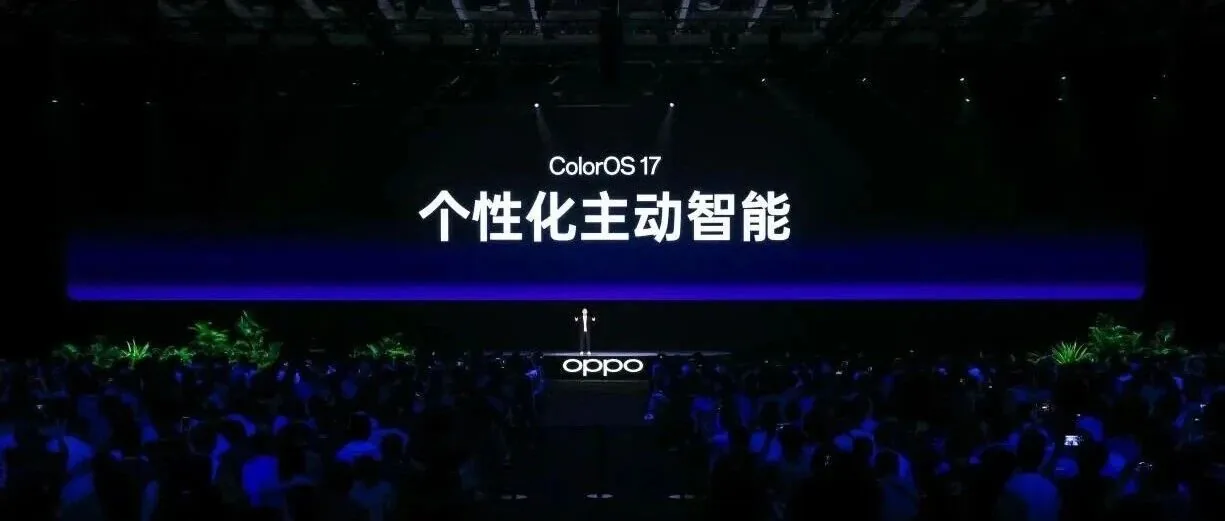
- Release date: ODC 2026 (referred to as ‘this year’s ODC’)
- New software version: ColorOS 17 introduces ‘Memory Background’ and ‘About to Happen’ features
- New hardware: Xinli Ball (心力球), OPPO’s first new product category in eight years, positioned as ‘AI Personal Advisor’
- Availability: No test version mentioned; confirmed as full product line
- Key partnership: Agreements with Tencent Maps, Alipay, and WeChat to implement A2A (Agent to Agent) protocol
On-Device Strategy: Competing on Memory, Not Cloud Models
OPPO’s ColorOS Wisdom R&D Director Jiang Yuchen defines the next-gen AI smartphone as one driven by user intent: ‘Users say one sentence, and the phone does the job—no app opening or repeated clicks.’ She bluntly states that none of today’s smartphones, including OPPO’s own, qualify as true AI phones, as the industry has not yet reached the passing threshold.
This assessment underpins OPPO’s strategic pivot: abandoning the race to develop cloud-based foundation models in favor of in-house on-device model development. Jiang argues cloud models function like ‘power plants’—their underlying technologies are increasingly open, making experience differentiation temporary and inevitable to converge. True differentiation, she insists, requires deep understanding of user intent, which demands on-device handling of persistent contextual memory—privacy and real-time performance cannot both be secured if data is sent to the cloud.
On-device models offer more than just privacy. For a body-worn device like a smartphone, thermal throttling, battery drain, and performance bottlenecks directly dictate user satisfaction. While cloud-only approaches only risk token costs, on-device failures are existential: ‘It’s a life-or-death game, a zero-one problem.’ OPPO plans to leverage hardware-software co-design—its core competency as a smartphone maker—to optimize memory, performance, and power together.
Memory and Proactive Services: From Storage to ‘Memory Body’
OPPO structures its memory system in three layers: raw data management, memory body (unstructured modeling), and retrieval. Jiang stresses the memory body is not a knowledge graph but closer to the human brain forming vague concepts with associations: ‘The generalization capability of large models means memory won’t be mere storage-and-retrieval.’
A pivotal counterintuition lies in structure handling: even with years of Chengdu business-trip tickets stored, naive retrieval returns the entire history rather than the latest flight—requiring event sequencing and built-in forgetting. The engineering solution is a cross-scenario ‘event table,’ with the long-term goal of co-designing memory and models.
ColorOS 17 delivers two key upgrades:
- Memory Background: Built on the memory-symbiosis engine, it learns usage patterns for personalized resource scheduling, achieving 55.6% higher background persistence than baseline devices with identical memory;
- About to Happen: Aggregates pending tasks and pushes services to the fore at the right moment—e.g., meeting links before appointments or bill reminders.
A2A Protocol and Ecosystem Integration: agent-to-agent Automation
OPPO adopts A2A (Agent-to-Agent) as its long-term technical path: smartphone agents communicate directly with service agents, bypassing simulated human screen-tapping. Jiang acknowledges tradeoffs: ‘The cost is the entire process is relatively slow,’ yet it unlocks richer experience and stronger privacy.
Alipay and WeChat are already integrated; Tencent Maps partnership exemplifies the model: OPPO handles intent perception, while Tencent serves solutions and services based on intent plus travel data. After re-engineering six modules, trip planning shrank from nine steps to one sentence, with user retention exceeding the overall dataset by 15%.
Xinli Ball (心力球), as a new AI hardware form, hangs on the chest to provide always-on extra-IO. OPPO clarifies it is not a recorder but an ‘AI advisor’ capable of reviewing speech quality, detecting mood shifts, and inferring implied meanings—supporting continuous acquisition of real-world signals.
Recommendations for End Users
- Buyers seeking one-sentence command completion should wait until ColorOS 17 ecosystem reach plateaus—no phone currently meets the full standard, including OPPO’s own;
- Existing OPPO users may upgrade to Memory Background and About to Happen features, but proactive capabilities depend on A2A partner integration depth; frequent travelers and bill-paying users benefit earliest;
- Xinli Ball (心力球) serves early adopters who demand omnisensory inputs beyond smartphones—ideal for executives, public speakers, and data-centric professionals.
Final Thoughts
OPPO’s strategy echoes an emerging industry view: as cloud models converge, the moat for hardware makers widens by ownership of personal contextual memory. The stack—on-device memory plus A2A agent ecosystems—forms a credible path from reactive tools to proactive co-pilots, while Xinli Ball (心力球) reveals OPPO’s ambition to escape the smartphone screen and engineer a tri-layer perception architecture.