
Core Event: Platformization and Billion-Yuan Funding
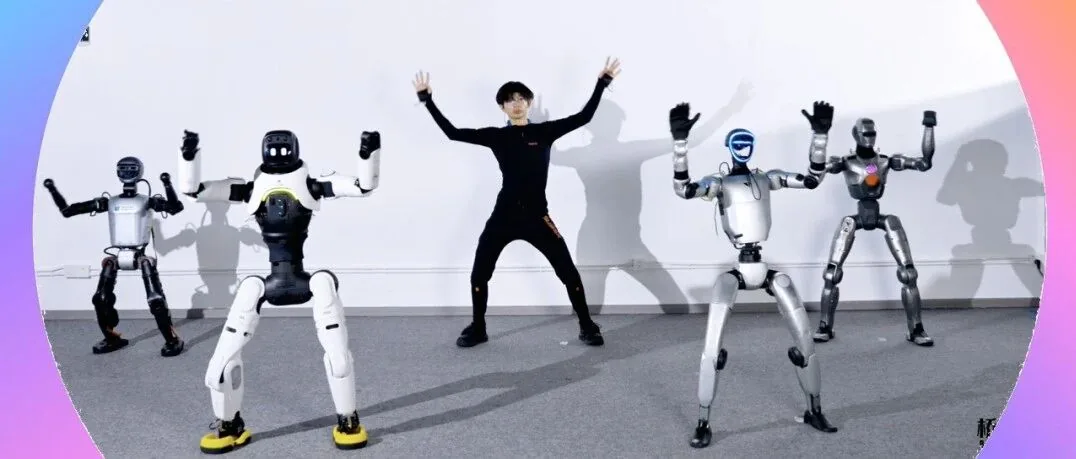
In August, QiaoJie ShuWu launched RoboCraft AI, transform its three-year project-based delivery into productized platform services, shifting revenue from one-time project fees to subscription and license fees per robot deployed. The company recently closed a billion-yuan-series funding led by China Mobile’s Chain Leading Fund, announcing:
- Platform enables video upload to real-deployment in under 30 minutes
- Standardized APIs available for developers; supported 50+ robot models across brands
- Developer annual subscription: thousands of yuan (initial); OEM License: 10,000 RMB per unit per year (initial, scalable with volume)
- Model weights not open-source; all capabilities accessed via cloud platform only
While project-based services generated several million RMB annually (2023), the platform aims to tie revenue directly to robot deployment volume.
Technical Breakthrough: From Task-Specific to General Baseline Models
A stark contrast defines the industry’s evolution: previously, most firms trained separate policies per motion—every new dance required retraining. Today, QiaoJie ShuWu’s baseline motion control model generalizes across human actions after seeing diverse motion examples, with performance scaling on training data volume.
Founder Shang Yangxing identifies three core challenges:
- Algorithmic: Real-time tracking of arbitrary motions + full dynamics control
- Engineering: High-frequency closed-loop control (far exceeding upper-body operation sample rates)
- Data: Quality motion capture requires thousands of hours; industry-wide quantities remain limited
The company operates a data factory achieving 1,500 hours/month (August 2024), with thousands of hours of high-quality captured data total—including hundreds of hours openly licensed. This contrasts sharply withsome vendors citing “10,000–20,000 hours” of video-extracted data, which QiaoJie ShuWu notes lacks motion-capture fidelity.
Integrating a new robot model still requires 4–5 days for model training; if cross-body generalization succeeds, adaptation drops to hours. Cross-body generality (single model controlling multiple robot types) remains unrealized, with a one-year roadmap target.
Business Model: From Projects to Ecosystem Revenue
The platform shift addresses a fundamental limitation: though serving 40+ clients across 50+ robot platforms, project work remains “unscaleable and decoupled from hardware sales”—clashing with long-term ambitions.
Early adopters center on entertainment and rental businesses, with new orders from major automotive EV brands and listed companies,valuing both cross-model motion portability (same choreography runs on different robots) and market-wide lack of end-to-end tools—a complete pipeline from video upload to deployment.
| Revenue Model | Initial Pricing | Target Customers | Unit Economics | Source |
|---|---|---|---|---|
| Subscription | Thousands RMB/year | Developers | Recurring, per seat | Direct quote |
| License Fee | 10,000 RMB/unit/year | OEMs | Per-unitRoyalty | Direct quote |
| Projects (phasing out) | Millions RMB/project | Custom clients | One-time | Textual事实 |
Practical Recommendation: Who Should Act Now?
Act immediately if:
- You operate or plan to deploy multi-brand robots and need rapid dance/choreography deployment
- You build dual-arm mobile manipulators and seek to offload full-body motion to focus on task-level skills
Wait if:
- You expect video-to-grasping automation: the company explicitly states Skill-layer tasks (e.g., grasping) remain developer responsibility
- You require cross-platform generalization out-of-box: that capability is still in engineering phase
Final Note
QiaoJie ShuWu’s “small-brain” strategy reflects confidence in layered robotics evolution: only after standardized Motion-layer infrastructure does cross-vendor Skill reuse become viable. Like smartphones—the Android ecosystem succeeded only after open baselines emerged, not from unified hardware—40 clients and 50 robots validate the technical feasibility; the platform may finally unlock interoperability across a fractured industry. A bottom-up foundation promises broader top-down innovation later.