
Qualcomm Unveils 2nm Dual Flagships: Progress on End-to-Cloud AI Strategy
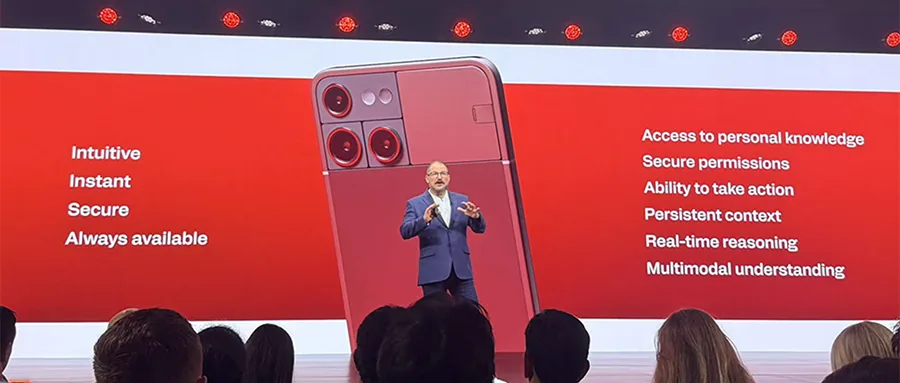
At the Snapdragon Summit 2026, Qualcomm unveiled two 2nm flagship chips—the Snapdragon 8 Gen 6 Ultra and Snapdragon 8 Gen 6 Premium—designed from the ground up for agent-based AI workloads. These chips enable 30-billion-parameter large models to run natively on smartphones, marking a significant milestone in on-device AI. Durga Malladi, Executive VP and GM of Technology Planning, Edge Solutions, and Data Center at Qualcomm, elaborated on the company’s end-to-cloud AI strategy following the event.
Custom CPU and HBC: Building Competitive Differentiation
Qualcomm’s return to the data center CPU market centers on its proprietary Oryon CPU architecture. Initially introduced for PC platforms in 2023, Oryon has been progressively expanded across mobile and now data center products. Malladi emphasized that Oryon delivers “significant performance and performance-per-watt advantages” compared to current industry offerings.
The key differentiator lies in Qualcomm’s Arm architecture licensing, which allows deep microarchitectural innovation. This end-to-end IP portfolio—spanning CPU, GPU, NPU, memory subsystem, and packaging—forms Qualcomm’s unique competitive advantage. In the agent AI era, CPUs have evolved beyond their traditional role as system “front-end” processors to become critical orchestrators responsible for task coordination and decision-making.
Equally significant is Qualcomm’s 3D-stacked High-Bandwidth Computing (HBC) architecture. As a pioneer in this space, Qualcomm has formalized its near-memory computing approach: a discrete 3D stack integrating compute dies beneath LPDDR DRAM dies, effectively placing the compute core at the bottom of a “memory cube.” First- and second-generation HBC products will power the AI250 and AI300 data center AI chips, respectively. Notably, while previously considered data-center-only, Qualcomm CEO Cristiano Amon confirmed HBC’s expansion to end-user devices—a significant revelation that broadens the technology’s applicability.
Open Software Stack Against the CUDA Ecosystem
In response to NVIDIA’s CUDA ecosystem dominance, Qualcomm has opted for the open-source path. The company’s acquisition of AI infrastructure firm Modular provides access to Mojo—a programming language that will be fully open-sourced under the Apache 2.0 license and designed for cross-platform compatibility. Similarly, Qualcomm’s MAX AI inference framework follows the same openness principle: most components will be open-sourced, with some licensed, accessible to all developers. Partner AMD has publicly endorsed Qualcomm’s open-architecture approach.
End-Edge AI Deployment: Collaborative Breakthroughs with Chinese Partners
Qualcomm’s AI strategy hinges on robust ecosystem collaboration. Two live demos at the summit exemplify this: the Qwen Book, Alibaba’s native agent PC, and an on-device agent demo executing a 30B MoE model on smartphones. The model, originally based on Alibaba’s Qwen 30B and fine-tuned by StepRange as StepEdgeOmni, was deployed in collaboration with two to three partners. Malladi noted Qualcomm evaluates potential partners based on their capacity for innovation and remains open to diverse commercial arrangements.
Deployment Guidance and Target User Profiles
- Ideal for: Flagship smartphone users prioritizing energy efficiency and end-to-cloud synchronization; enterprise developers seeking open AI ecosystems; AI application developers requiring local 30B-parameter model inference.
- Consider waiting: Budget-conscious mid-tier device consumers (initial premium pricing expected); enterprises with deep CUDA dependencies requiring migration time; data center operators requiring proven HBC stability (monitor first-generation deployments).
In Conclusion
The Snapdragon 8 Gen 6 launch represents Qualcomm’s strategic leap from a mobile connectivity provider to a full-spectrum AI computing platform. While the industry debates GPU versus NPU supremacy, Qualcomm’s answer is clear: CPU, GPU, and NPU must co-evolve, with memory bandwidth and energy efficiency emerging as the true constraints for agent AI. This holistic approach both challenges proprietary ecosystems and aligns with the industry’s broader shift toward open, interoperable AI infrastructure.