Open-Weight Foundation Models Enter High-Stakes Competition
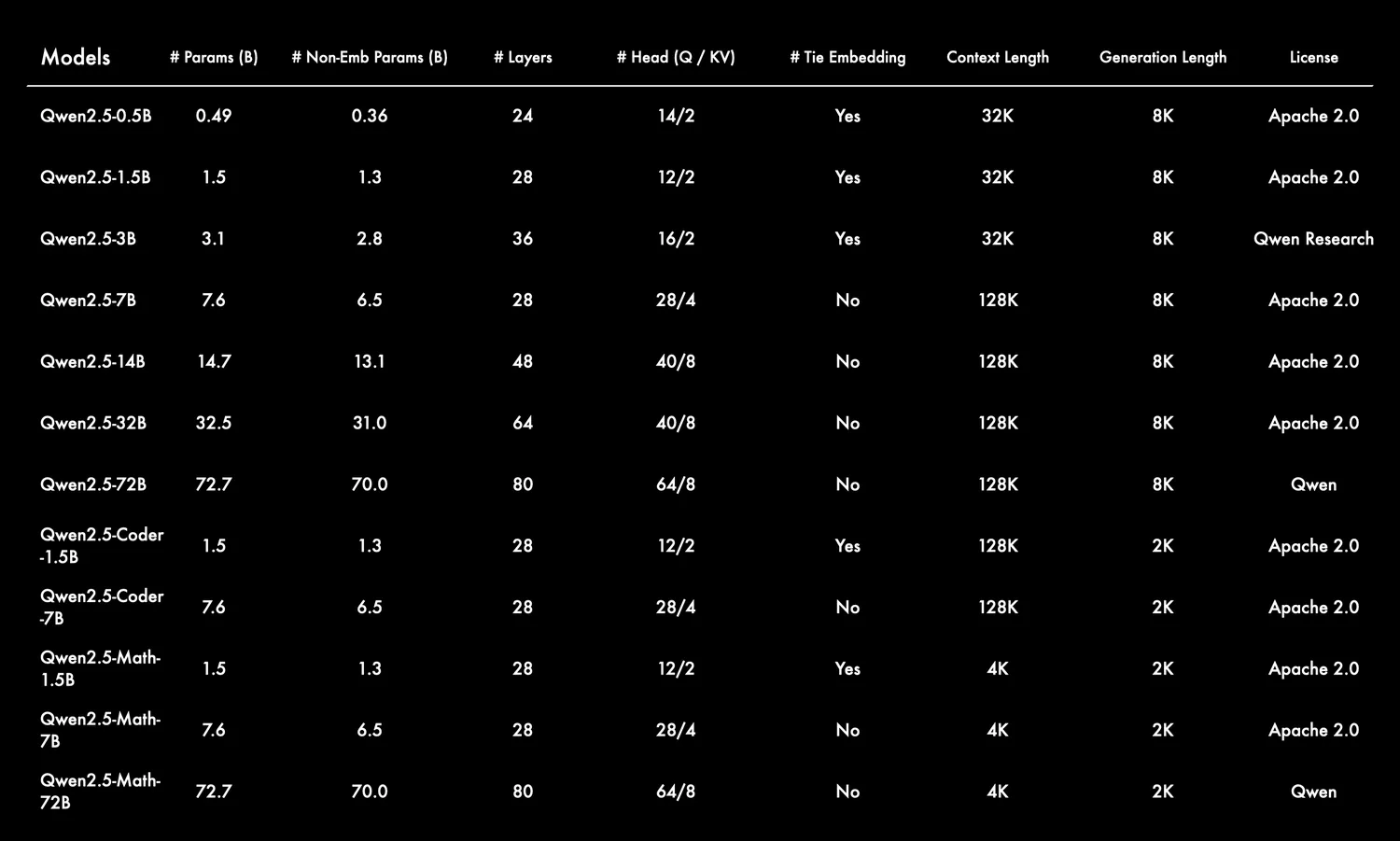
In late August 2026, just three months after Qwen2’s release, Alibaba’s Tongyi Lab unveiled the Qwen2.5 series—including general language models, coding-specialized variants, and mathematics-focused versions. All models follow a dense decoder-only architecture and span seven parameter sizes from 0.5B to 72B. Key facts:
- Release timing: Late August 2026
- New versions: Qwen2.5 (0.5B/1.5B/3B/7B/14B/32B/72B), Qwen2.5-Coder (1.5B/7B/32B), Qwen2.5-Math (1.5B/7B/72B)
- Pricing & availability: Open-weight models under Apache 2.0 (excluding 3B and 72B variants)
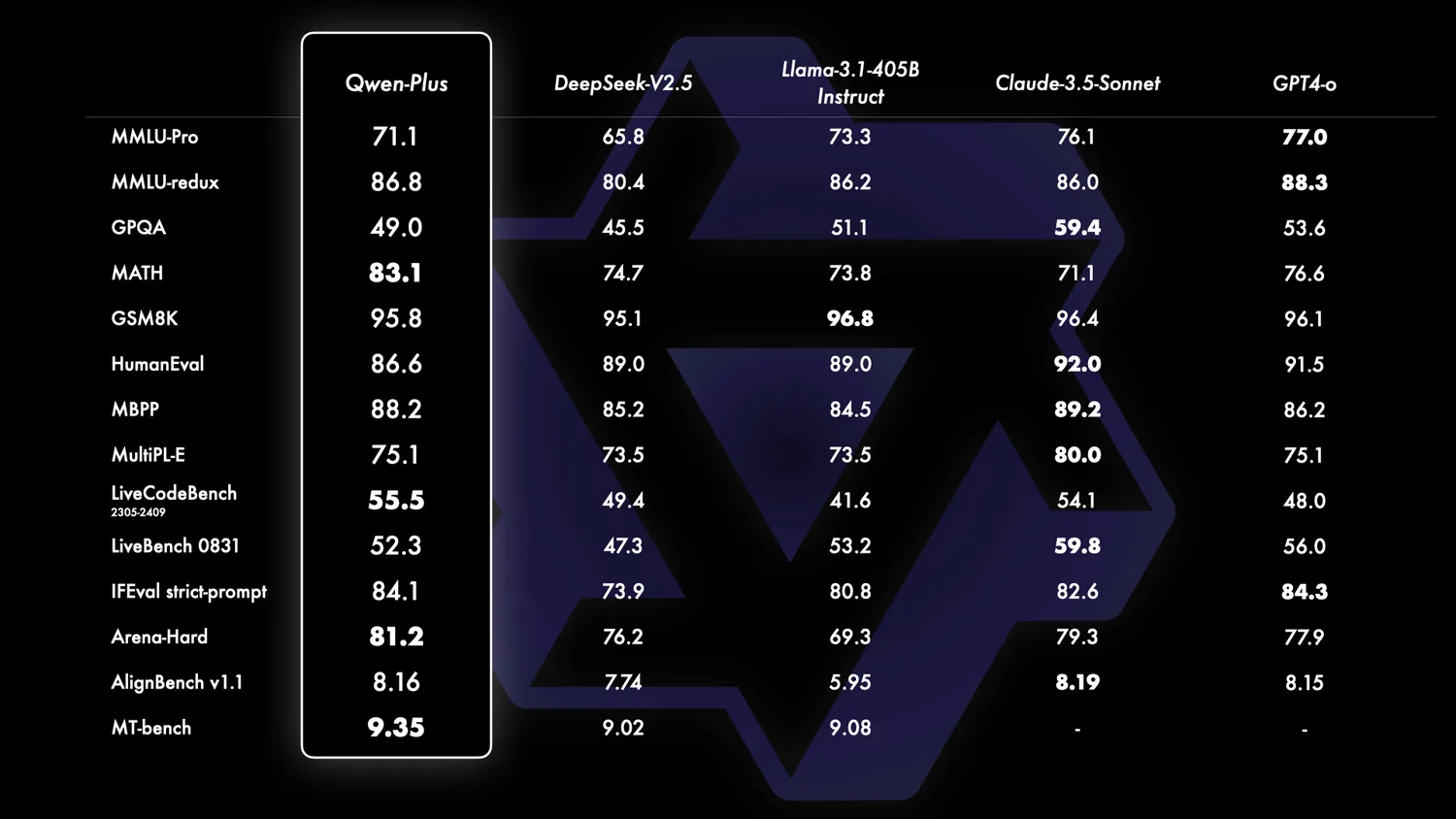
- API offerings: Qwen-Plus and Qwen-Turbo accessible via Model Studio
- License status: Open-weight across most variants; 3B and 72B exceptions noted
Dubbed “the largest open-source release in history” by the team, this drop covers everything from edge-deployable lightweight models to high-performance inference engines.
Performance Milestones and Surprising Gains
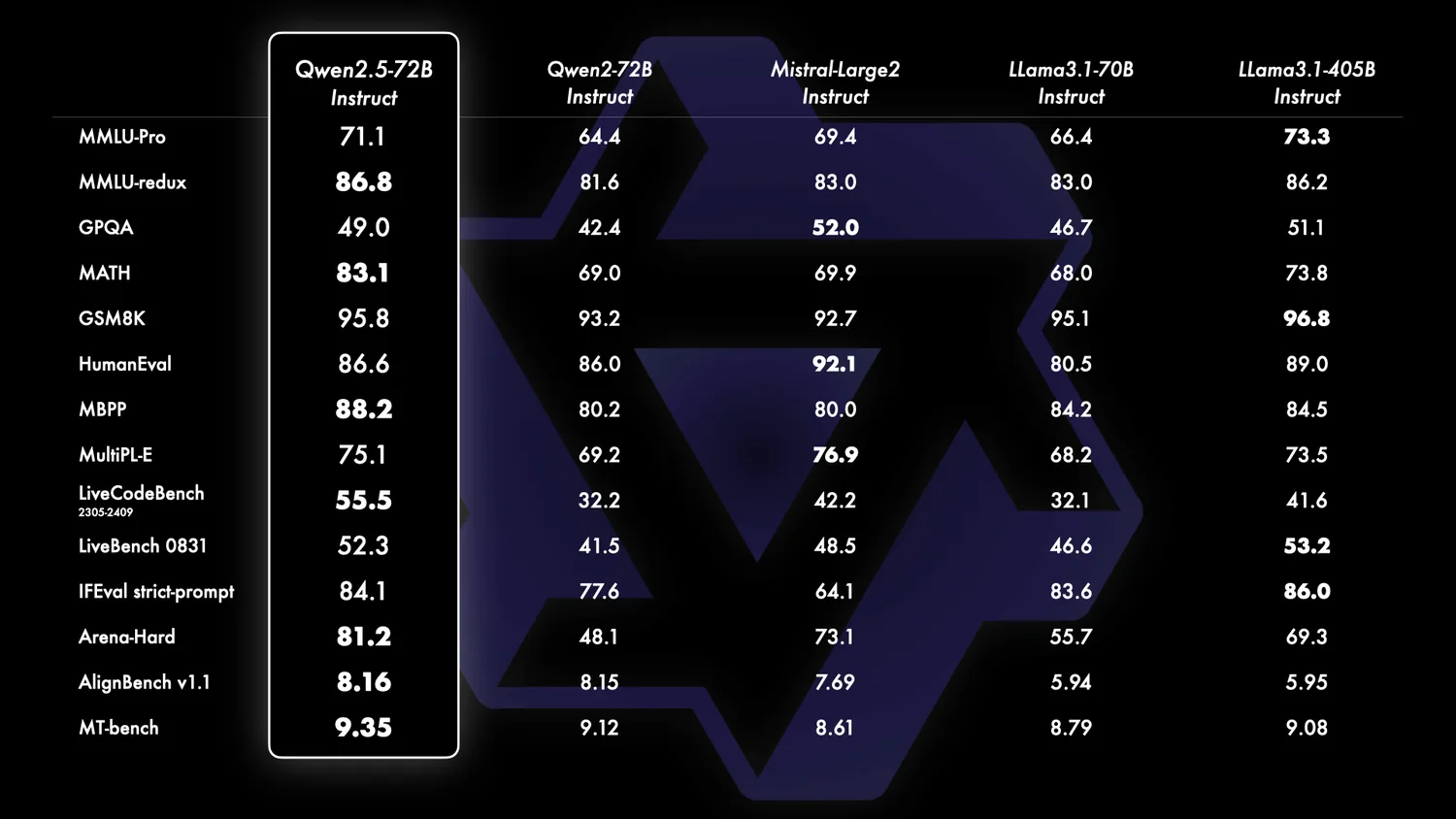
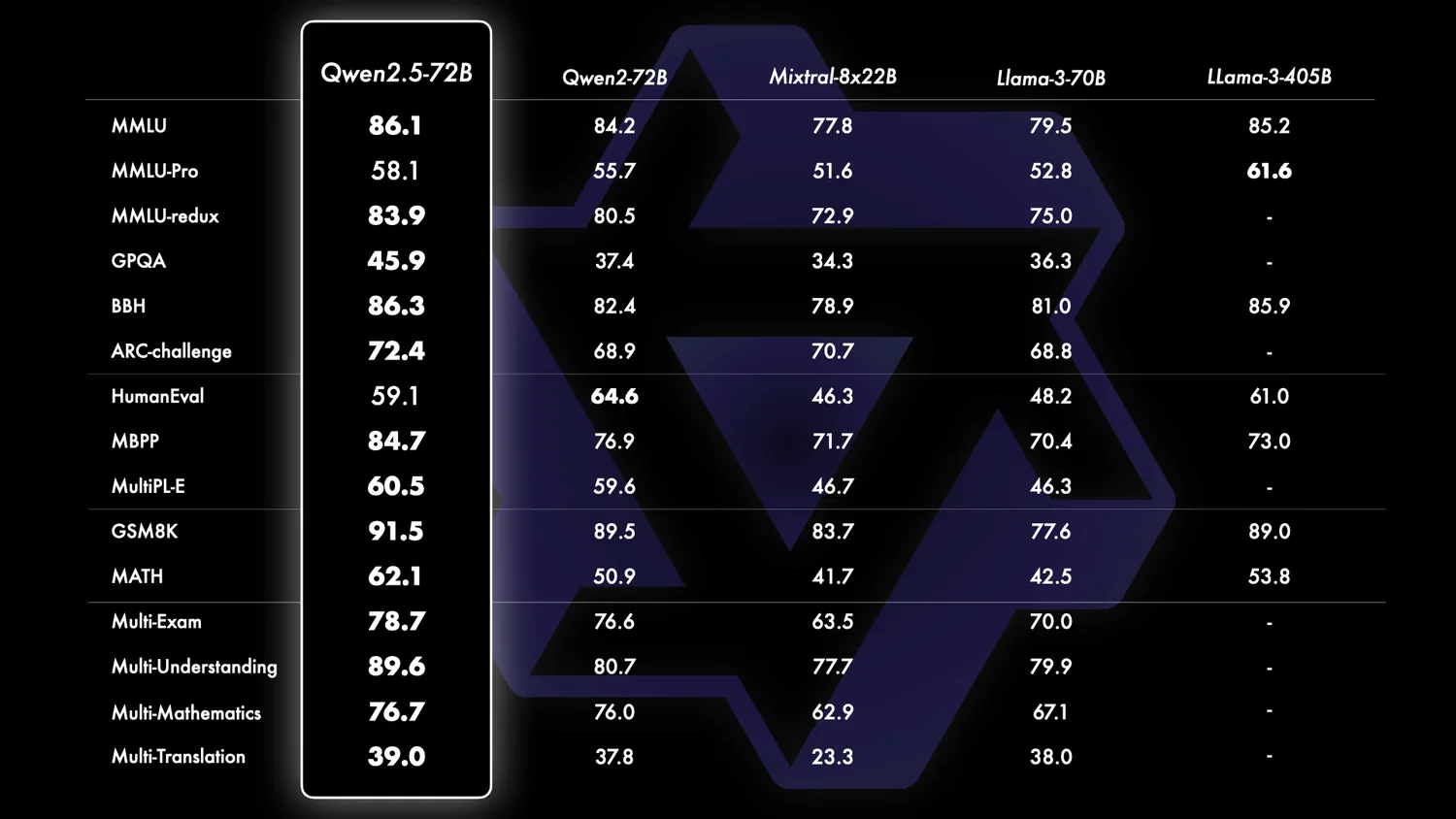
Qwen2.5 models deliver substantial capability jumps across multiple dimensions: trained on 18 trillion tokens, they significantly expand知识储备 (MMLU scores exceeding 85) while achieving strong coding performance (HumanEval 85+) and math proficiency (MATH 80+). A standout development: the smallest Qwen2.5-3B model—with only 3 billion parameters—achieves MMLU scores above 65, illustrating a broader industry trend toward high-knowledge-density small language models (SLMs) instead of raw parameter scaling.
Context windows remain at 128K input and 8K output tokens, with multilingual support for 29 languages including Chinese, English, French, German, Japanese, Arabic, and others. Post-training improvements center on four pillars: enhanced long-text generation, better structured-data comprehension (tables), more reliable JSON output generation, and robustness across diverse system prompts—crucial for chatbot roleplay scenarios.
Qwen2.5-Coder was trained on 5.5 trillion code-related tokens; its 7B variant competes with larger general-purpose models. Qwen2.5-Math adds Chinese language support and integrates CoT (Chain-of-Thought), PoT (Program-of-Thought), and TIR (Tool-Integrated Reasoning) capabilities. Even its 1.5B smallest variant shows competitive performance against much larger models.
Model Specification Comparison
| Model Type | Parameter Sizes | License | Key Feature |
|---|---|---|---|
| Qwen2.5 | 0.5B/1.5B/3B/7B/14B/32B/72B | Apache 2.0 (except 3B/72B) | General LLM, MMLU >85 |
| Qwen2.5-Coder | 1.5B/7B/32B | Apache 2.0 | Coding-optimized, 5.5T code tokens |
| Qwen2.5-Math | 1.5B/7B/72B | Apache 2.0 | Math-optimized, CoT/PoT/TIR support |
| Qwen2-VL-72B | 72B | Not specified | Vision-language model, upgraded over July version |
| Qwen-Plus (API) | — | Commercial | Production-grade API service |
| Qwen-Turbo (API) | — | Commercial | Cost-effective, low-latency API |
License files are available in respective Hugging Face repositories for verification.
Practical Adoption Guidance
Developers should consider these paths:
- Ready to deploy now: Small teams or resource-constrained environments benefit from Qwen2.5-7B/14B/32B for general tasks, coding assistance, and math reasoning—achieving large-model performance at lower compute costs. Educational institutions can start with Qwen2.5-Math-1.5B for teaching or automated problem-solving.
- Wait for full release: Applications requiring sensitive Chinese nuance or high-error-tolerance scenarios (legal, medical) should await enhanced Qwen2.5-Math or full Qwen2.5-Coder availability. Production systems targeting GPT-4o/ Claude 3.5 Sonnet parity should currently leverage Qwen-Plus API.
Final Thoughts
When a 72B open-weight model matches performance benchmarks of closed-source counterparts, open-source ecosystems shift from mere accessibility to genuine competitiveness. Remarkably, Qwen2.5-72B’s base (un-instructed) model rivals 405B-scale Llama-3—highlighting how architectural innovation and training data efficiency now define next-generation frontier models.