Launch Timeline: Simultaneous Release with Elevated Positioning
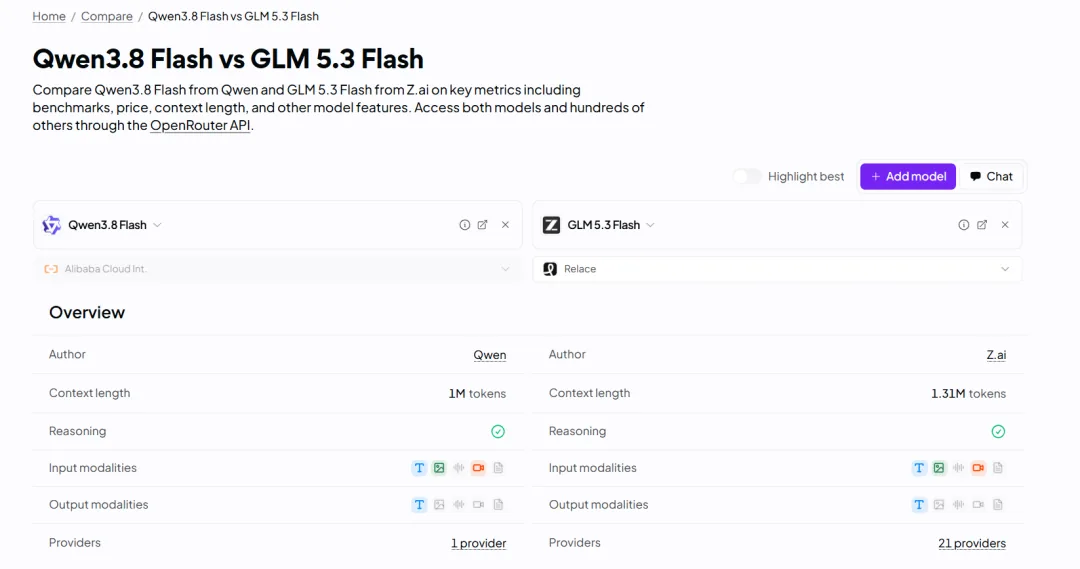
On August 26, 2026, Alibaba’s Qwen Lab and Zhipu AI simultaneously unveiled new Flash-series large models: Qwen3.8-Flash (and Flash-Next variant) and GLM-5.3-Flash. This release signals a strategic shift for Flash products—not merely as budget-tier backups, but as primary offerings targeting real-world high-frequency scenarios including office work, programming, and deliverable generation.
Key facts:
- Release date: August 26, 2026
- New versions: Qwen3.8-Flash, Qwen3.8-Flash-Next; GLM-5.3-Flash
- Pricing: Flash models significantly cheaper than flagship tiers; Qwen3.8-Flash cost ~¥6.26, GLM-5.3-Flash ~¥7.72 for this task
- Availability: Currently accessible (tested in Claude Code)
- Weight openness: Qwen3.8-Flash-Next is open-source as an architectural reference; GLM-5.3-Flash open-source status undisclosed
Head-to-Head Test: Engineering Completeness vs. Workflow Understanding
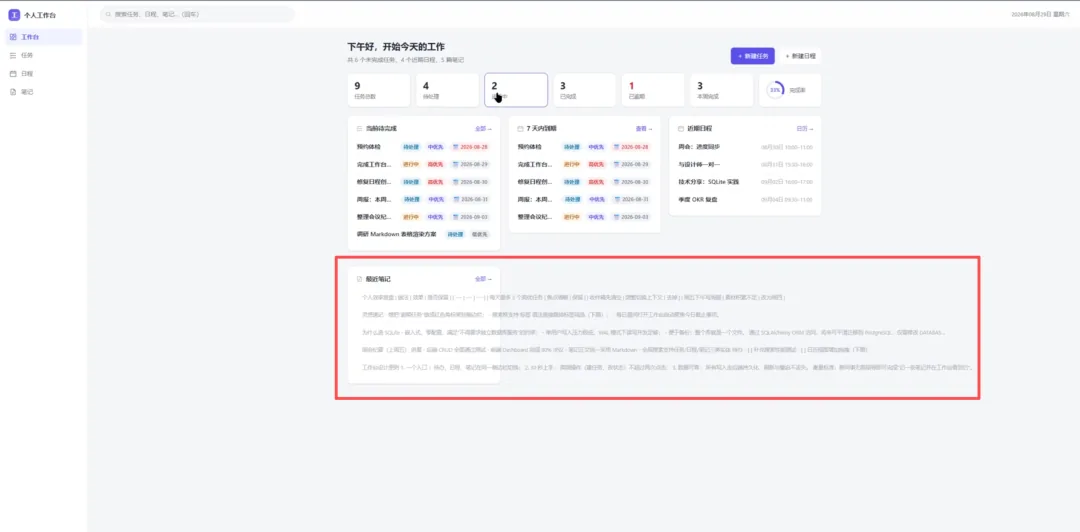
To benchmark capabilities, testers demanded both models build a complete, standalone personal workspace web app from scratch—covering task management, calendar, notes, dashboard, and global search—with real backend logic and persistent data storage.
A two-round process (initial generation + self-optimization) revealed divergent strengths:
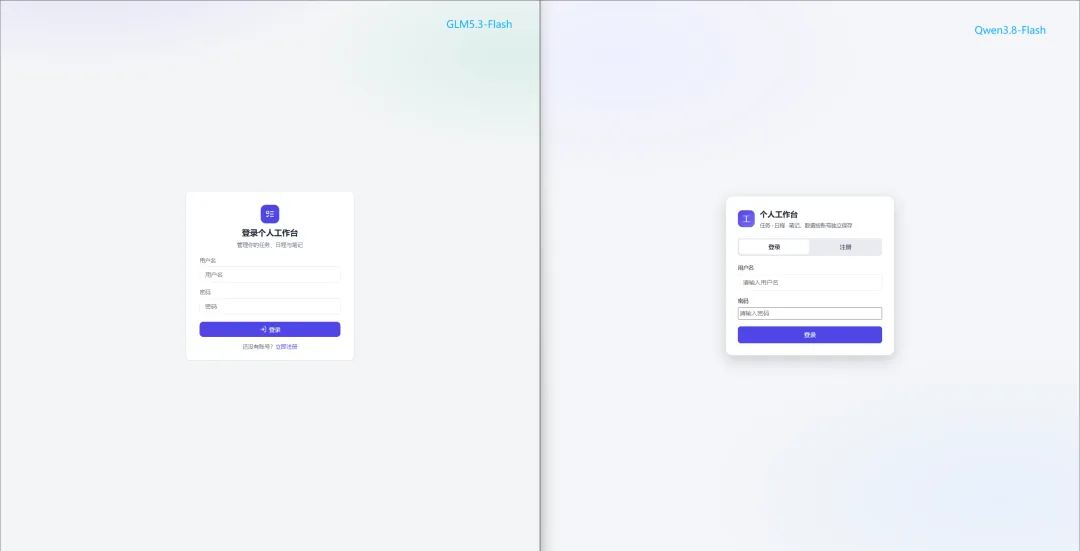
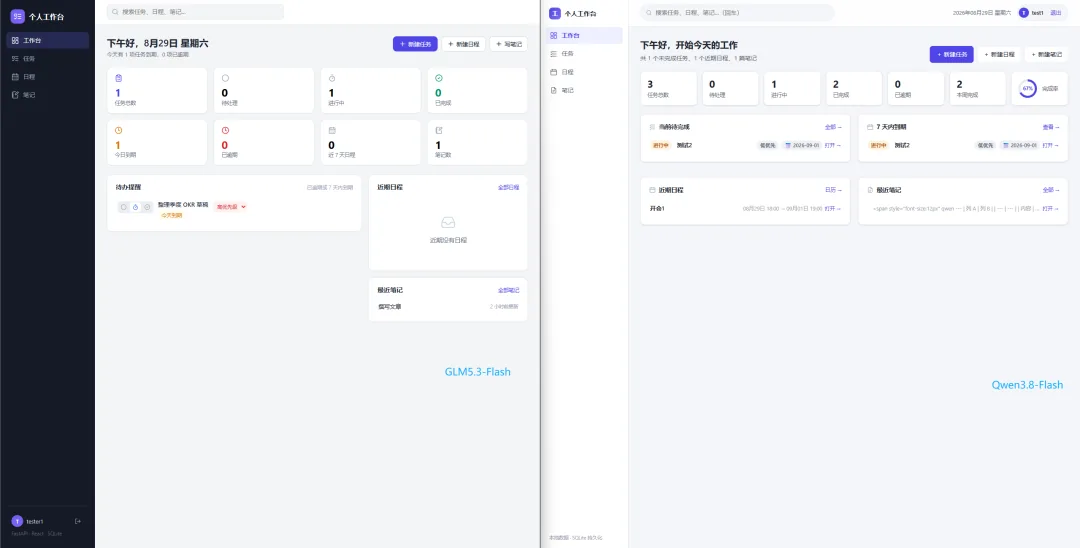
- GLM-5.3-Flash leaned toward engineering delivery: Quickly assembled complete SaaS scaffolding with login, navigation, CRUD operations, and statistical dashboards; clear module boundaries.
- Qwen3.8-Flash sooner grasped personal workflow rhythm: Integrated intelligent sorting, overdue alerts, and 7-day preview in task view; enhanced notes with Markdown preview, tags, and toolbar; homepage centered on “current pending” and “upcoming due” items.
Unexpected contrast: Despite larger scale (320B total vs 125B), GLM-5.3-Flash incurred more tool calls, higher output tokens, and greater LLM call frequency (123 calls) than Qwen3.8-Flash, reflecting its “build-full-skeleton-first” engineering bias; Qwen3.8-Flash (only 6B activated parameters) achieved objectives with lighter execution.
Technical Comparison
| Metric | Qwen3.8-Flash | GLM-5.3-Flash |
|---|---|---|
| Main model size | 125B (6B activated) | ~320B (18B activated) |
| Technical auxiliaries | 51B N-gram Embeddings + 4B MTP | Sparse + Linear Attention + Expert pool |
| Context support | 1M tokens | Not specified; real-world context more controlled |
| Target benchmarks | Office task handling, coding, multimodal | Toolathlon, Terminal-Bench (agent tools) |
| Cost per task | ~¥6.26 | ~¥7.72 |
Who Should Adopt Now?
Recommendations based on model traits:
Adopt Flash models immediately if:
- Handling daily high-frequency office tasks (planning, scheduling, meeting notes)
- Building personal efficiency tools or lightweight SaaS prototypes
- Processing long documents (1M tokens) or auditing code repositories
- Prioritizing cost control and service availability for enterprise apps
Wait or choose flagship models if:
- Tackling high-complexity reasoning (financial modeling, multi-step decisions)
- Delivering UIs requiring pixel-perfect quality
- Building workflows demanding strong tool chaining and autonomous task decomposition
In Summary
Flash models are transitioning from “co-pilot” to “driver” in daily productivity—their value now lies in reshaping workflow design logic, not just reducing cost. The主力 models powering daily office work will be those most attuned to real user rhythms and sustainable scaling economics.