
Roland Enters Generative AI Music with Melody Flip, a DAW-Based Creative Spark Tool
Roland has introduced Melody Flip, a generative AI music tool delivered as a plugin for digital audio workstations. It is not designed to compete directly with the “push button, get song” model associated with Suno. Instead, it aims to provide musical ideas that producers can develop further inside a DAW.
- Format: DAW plugin
- Core functions: generation of melodies, chord progressions, basslines, drums, or any combination of them
- Palette count: around 250 genre-based “Palettes”
- Input options: start from scratch or use a reference track
- Output focus: simple musical loops and MIDI material, not finished songs with vocals and full arrangements
A Spark, Not a Finished Song
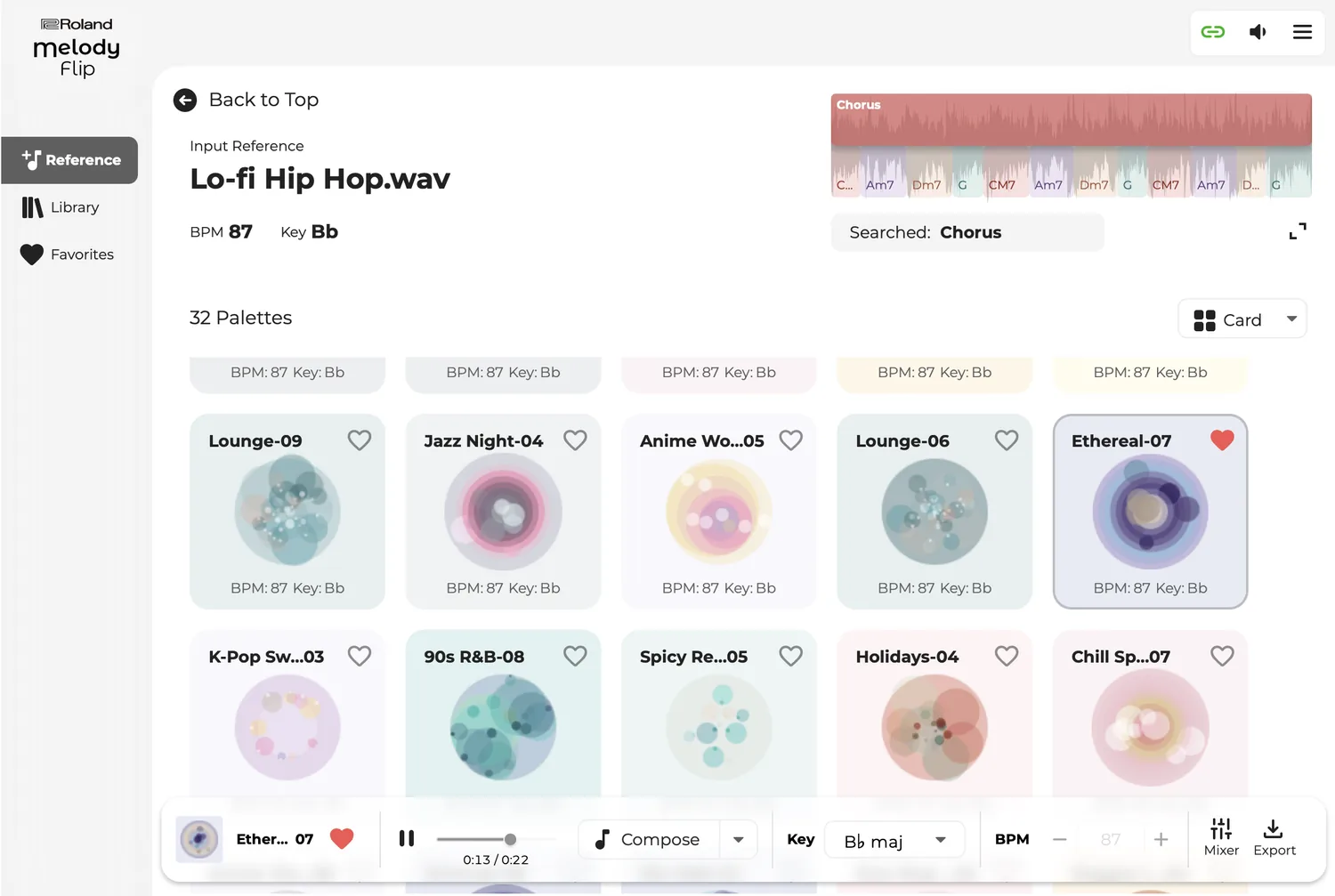
The key difference between Melody Flip and tools like Suno or Udio is that Melody Flip does not generate polished tracks with vocals and full arrangements. The original report frames it as a source of creative sparks rather than a complete songwriting machine.
Users cannot type a prompt such as “acoustic country rock with clean male vocals, gentle brushed drums, and sparse pedal steel at 98BPM” and expect a fully formed song in a specific style. Instead, control is more limited: users choose a genre, note density, BPM, and musical key, then work with the result.
That limitation may be intentional. For producers who already build tracks inside a DAW, a fully finished AI song can be harder to reshape. A smaller musical fragment is often easier to edit, reharmonize, re-orchestrate, and integrate into an existing production.
Palettes and Workflow
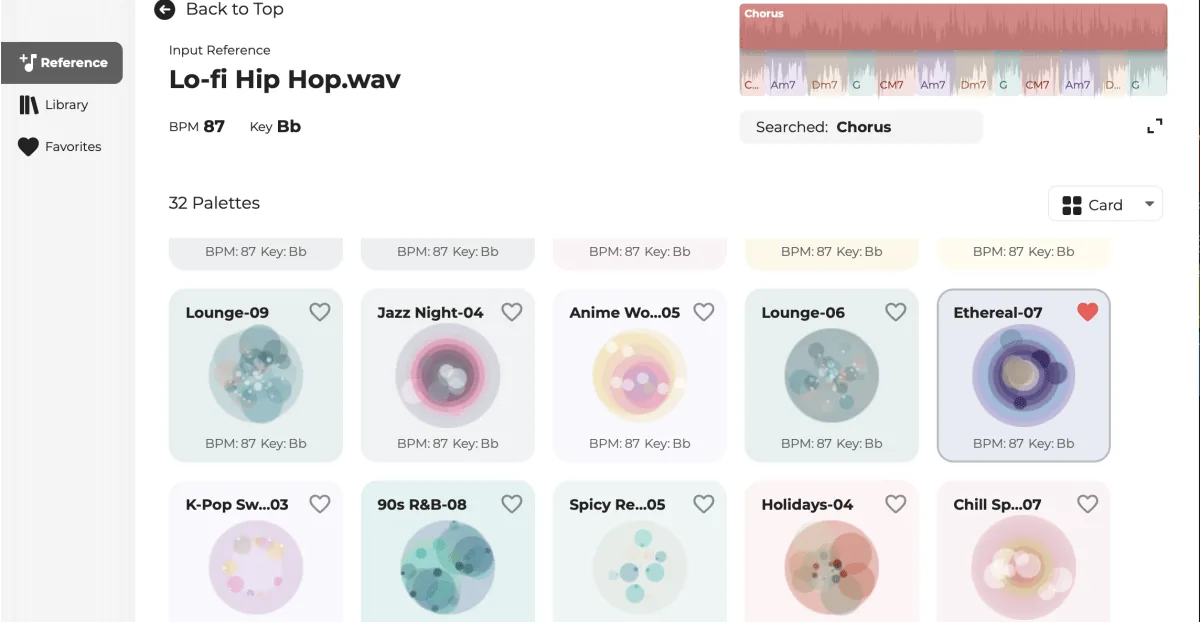
Melody Flip includes around 250 “Palettes,” which are themed collections of musical ideas sorted by genre. These act as starting points for generation and help narrow the stylistic direction.
The workflow has two main paths:
- From scratch: choose any combination of melody, chords, bassline, or drums, then set basic parameters
- Reference-based: provide a reference track and let the tool build on melodic ideas from it
The genre list ranges from familiar categories such as “80s disco” and “90s R&B” to more specific options like “Kawaii Future Bass” and “Anime World.” While that does not offer the same precision as natural-language prompting, it still gives users a way to constrain the musical output.
Sound Selection and MIDI Export

The built-in sounds are another sign that Melody Flip is not meant to be used straight out of the box. According to the original report, many presets resemble the general MIDI tones associated with 1990s video games.
The intended workflow appears to be exporting MIDI data from Melody Flip into a DAW, then shaping it with stronger synth plugins, samplers, or other production tools. In that sense, Melody Flip is better understood as an ideation assistant than as a complete production environment.
How It Differs from Suno and Udio
| Aspect | Melody Flip | Suno / Udio |
|---|---|---|
| Input method | Genre, note density, BPM, key, or reference track | Natural-language text prompts |
| Output format | Simple loops and MIDI material | Full songs with vocals and arrangements |
| Control style | Limited musical parameters | Descriptive text-based direction |
| Main use case | Inspiration for further DAW production | Fast generation of listenable finished tracks |
Roland’s Broader Context
The original report notes that Roland had alienated some customers with its messy Roland Cloud subscription service, while more recent products such as the P-6 Creative Sampler, SH-4d, and Gaia 2 helped address issues in the company’s lineup. The TR-1000 was also described as a tribute to Roland’s analog heritage.
Against that backdrop, Melody Flip is a cautious AI move. It does not try to replace the full creative workflow. Instead, it keeps AI in the idea-generation stage and leaves arrangement, sound design, and production decisions to the musician. Given the broader music community’s skepticism toward generative AI, however, the tool may not automatically earn Roland much goodwill.
Final Thoughts
The most useful role for generative AI in music may not be finishing songs, but helping creators get started. Melody Flip focuses on generating raw musical material—melodies, chords, basslines, and drums—that can be edited and developed inside a DAW.
For producers who want a prompt-to-song engine, this is not the right tool. For musicians looking for a source of MIDI-based ideas, Melody Flip could become a practical part of the writing process.