
Sixunited Unveils Three AI NAS and Mini PC Models at Intel Event
Key Product Launches and Core Specifications
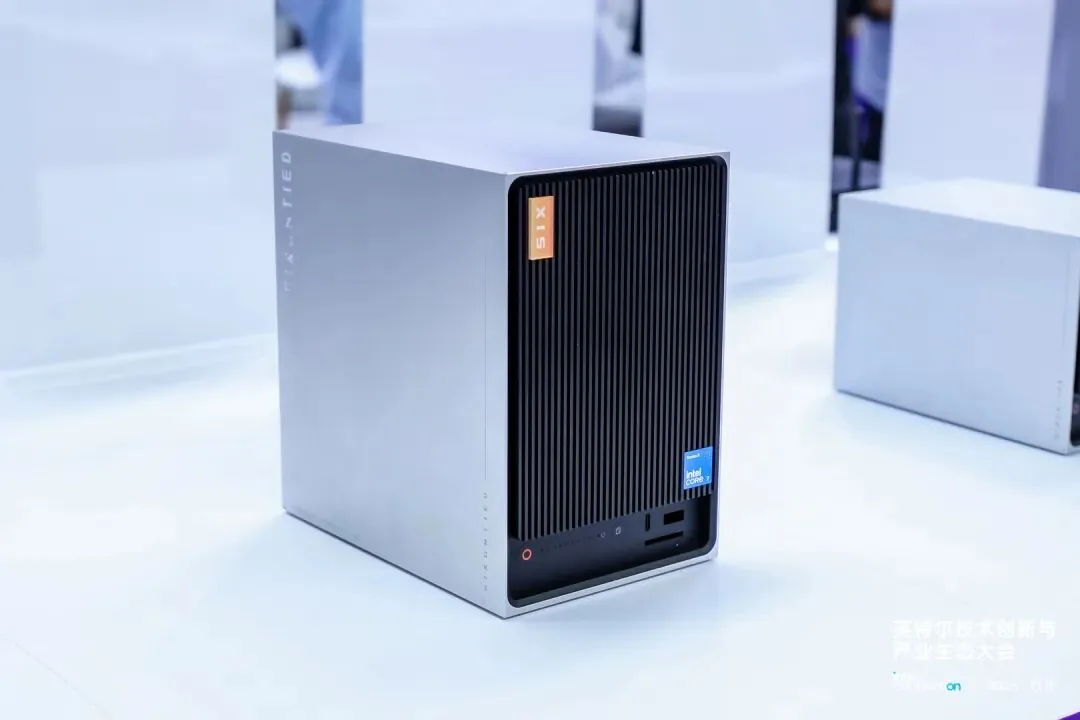
Sixunited has unveiled multiple new products based on the 3rd Gen Intel Core processors at the Intel Connection 2026 event on September 27, covering NAS, mini PCs, and laptops. All新品采用12/13代酷睿架构升级版(酷睿/酷睿Ultra), with no specific core or frequency details disclosed. The company emphasizes “unified base platform + heterogeneous acceleration” in its holistic system design approach.
- Launch date: September 27, 2026 at the conference
- Platform foundation: 3rd Gen Intel Core (including Ultra variants) + LPDDR5X memory + UFS 3.1 / PCIe SSD
- Connectivity highlights: Wi-Fi 6/7, 10GbE/2.5GbE dual Ethernet, HDMI 2.1 + optional DisplayPort / Thunderbolt 4
Product Line Deep Dive: NAS Evolves Toward AI Storage, Mini PCs Push Size Limits
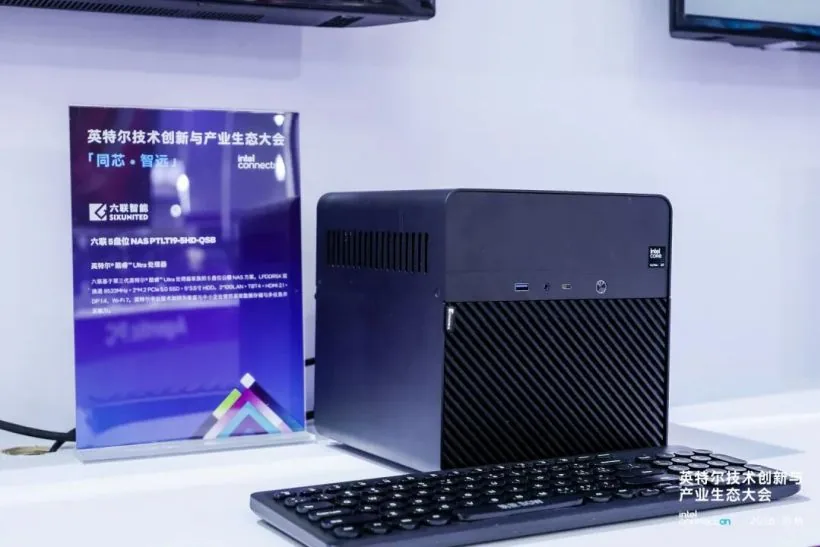
The WS18 marks Sixunited’s first officially named “AI NAS” model, targeting mid-tier multi-bay storage servers. It leverages the 3rd Gen Core processor, LPDDR5(X) memory, and UFS 3.1 main storage as a lightweight compute foundation. Surprisingly, WS18 lacks traditional SATA drive bays—instead offering three PCIe Gen4 M.2 SSD slots—indicating its role as a high-speed cache controller or local SSD-array orchestrator rather than a pure HDD enclosure.
Storage configuration combines three PCIe Gen4 M.2 slots with four 3.5" SATA drive bays, Wi-Fi 6 support; networking features a 10GbE + 2.5GbE dual-port setup for balanced backup and everyday connectivity; video outputs include HDMI 2.1 for one-click display or edge inference visualization. The coexistence of four 3.5" bays and three M.2 slots is rare in same-size competitors, suggesting target users likely need hybrid storage (hot-data SSD caching + cold-data HDD archiving).
The higher-end PTLT19-5HD-QSB targets professional creators or small AI training nodes. Based on the Core Ultra platform, it pairs LPDDR5X-8533 memory with two PCIe Gen5 M.2 slots, five 3.5" bays, Wi-Fi 7, dual 10GbE, and首次加入雷电4接口—a rarity in NAS products, as Thunderbolt 4 enables direct GPU or high-speed acquisition card connectivity, expanding its potential as an “edge attached compute node”.
Mini PCs and Mobile Devices: Rebalancing Size vs. Performance
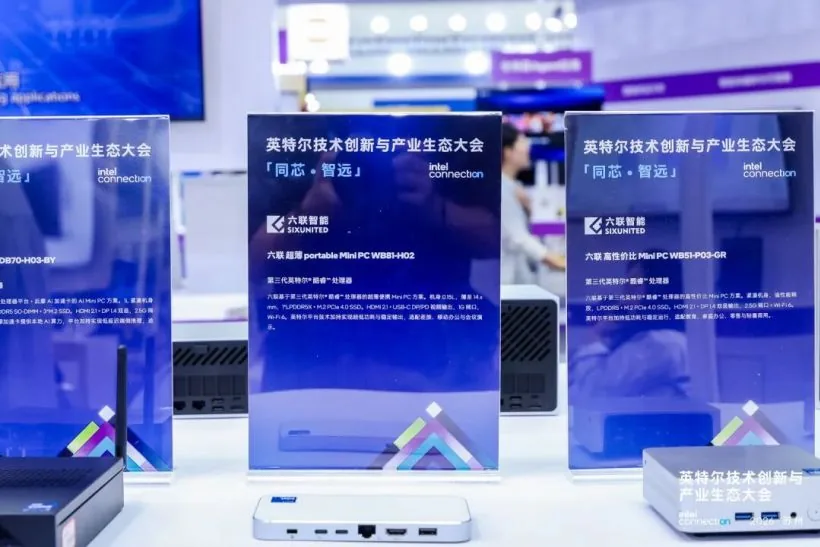
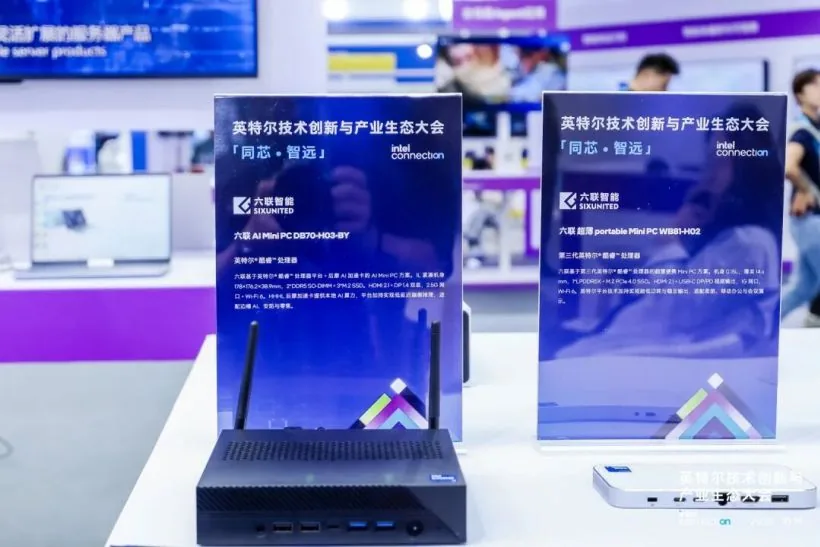
In extreme size reduction, the WB81-H02 sets a new 0.15L volume and 13.5mm thinness record among x86 mini PCs. It maintains LPDDR5X + PCIe Gen4 M.2 configuration while offering generous ports: full-featured USB-C (with DP alt mode/PD charging), HDMI 2.1, 1GbE, and Wi-Fi 6. The mold supports Alder Lake-N, Twin Lake, and Qualcomm Snapdragon C Kenai chips, suggesting Sixunited maintains supply-chain flexibility across x86 and Arm platforms.
The DB70 series (1L category) integrates the Hailo-based Houmou AI acceleration card in PCIe AIC HHHL form factor. These half-height, full-length cards are typical of early PCIe AI cards, indicating DB70 supports existing ecosystem-mature acceleration solutions. Two DDR5 slots and three M.2 bays ensure sufficient buffer for local offline model fine-tuning; Wi-Fi 6 plus HDMI 2.1/DisplayPort 1.4 strengthen multi-monitor workflows.
Mobile product lines follow dual paths:
- PN252-140M5-YDX-N01 ultrabook: Core Ultra + full-magnesium alloy chassis, 14" 2.8K OLED screen + 16h+ battery life, under 1kg—placing it among the lightest office laptops;
- WN35-140M-CS: Same gen Core + full-aluminum chassis (12.9mm), identical 2.8K OLED屏与16h+续航, just 0.4mm thicker;
- WP881-140M2-YDX tablet: Core platform + “2K” screen, LPDDR5X + PCIe NVMe, supports keyboard and stylus—targeting Surface Pro-class productivity.
Product Selection Recommendations and User Profiles
Suitable for immediate purchase:
- Small teams/AI studios needing hybrid storage (SSD caching + HDD archiving) should consider WS18;
- Creators/photographers requiring Thunderbolt 4 direct connectivity should watch PTLT19-5HD-QSB;
- Programmers/designers seeking desktop minimalism and high performance find WB81-H02 and DB70 ideal.
Recommended to wait:
- WN35/PN252 users should await real-world battery and thermal reports as source only lists theoretical values;
- Enterprises planning AI-accelerator deployments need compatibility confirmation with their software stack (chipset and driver details not disclosed).
Final Thoughts
Sixunited’s “one core, multiple wings” strategy retains NAS strengths while quickly entering Edge AI and mobile wellness markets. Rather than chasing single-parameter extremes, the company builds scenario-complete solutions through port configuration and structural integration—a pragmatic approach for Chinese brands navigating commoditized competition.
All specifications sourced from IT之家 coverage. Pricing and availability remain undisclosed.