
The Deal Officially Closes
AI coding startup Cursor has officially been folded into SpaceX, marking another strategic expansion for the aerospace and compute infrastructure company in the AI space. According to a blog post published by Cursor, the acquisition has closed. Cursor is no longer just an outside partner collaborating with SpaceX on technology—it is now fully integrated into the business.
The timeline for this deal was relatively tight. Earlier this year, SpaceX had already acquired xAI, another AI company founded by Elon Musk. Then, in April, SpaceX and Cursor announced a technical partnership while retaining an option to acquire Cursor for $60 billion. Two months later, as SpaceX went public, both parties indicated they would move forward with the acquisition. This latest announcement signals that the arrangement has moved from intent and negotiation into a completed phase.
Why Cursor Matters
Cursor is an AI coding tool—a category of software that uses large language models to help programmers write code, complete logic, explain engineering documentation, and perform refactoring. For developers, its value goes well beyond simple autocomplete: it translates natural-language requirements into actionable development steps, significantly reducing the cost of debugging and modifying code within large codebases.
The announcement repeatedly highlights SpaceX’s compute infrastructure. According to the original information, SpaceX is leasing its compute capacity to clients such as Anthropic and Google, and states that Cursor will gain access to the world’s largest pool of GPU resources upon integration. GPUs are the core chip resource for training and running AI models. Their parallel computing power is ideally suited to the massive matrix operations that large models require, meaning whoever can reliably access GPUs is better positioned to iterate on AI products.
Key takeaways:
- Acquisition option value: $60 billion
- SpaceX acquired xAI earlier this year
- SpaceX and Cursor initially announced a technical partnership in April
- SpaceX’s compute clients include Anthropic and Google
- SpaceX faces litigation over pollution from diesel generators at its data centers
Compute Takes Center Stage in M&A
This deal isn’t just about acquiring a hot AI coding product—it’s about bringing product, models, and infrastructure under a single umbrella. AI application competition looks superficial on the surface as a battle over features and user experience, but underneath it all it depends on model inference costs, response latency, and training iteration efficiency. For a tool like Cursor, every piece of code generated, every context retrieval, and every engineering analysis can consume substantial compute.
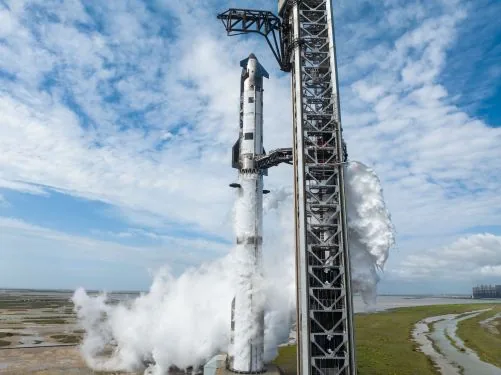
SpaceX is positioned in the announcement not merely as a rocket and satellite company but as a compute provider. The fact that it is leasing compute resources externally demonstrates that its infrastructure has already reached commercial maturity. Once Cursor is integrated, it can tap into those resources directly within the same organization. From an industry logic perspective, this effectively打通s the demand side of AI applications with the supply side of compute, reducing the uncertainty of external procurement and potentially accelerating product iteration.
That said, compute expansion comes with real-world constraints. The original reporting notes that SpaceX is facing litigation over pollution caused by diesel generators at its data centers. This serves as a reminder that the bottlenecks for AI infrastructure extend beyond chips—they include power supply, cooling, site selection, emissions, and regulation. The more critical large-scale GPU resources become, the harder it is to ignore their energy consumption and environmental impact.
Industry Impact and Trajectory

Cursor’s addition to SpaceX reflects a broader shift in the AI industry: from competition among individual products toward vertical integration. Companies that control application entry points need compute; companies that control compute need products that reach users. AI coding is a particularly compelling arena for this synergy—developers are highly sticky, usage frequency is high, and improvements in performance translate directly into productivity gains.
Going forward, market attention may shift from whether Cursor can ship new features to whether it can leverage SpaceX’s GPU resources to improve stability, reduce response latency, and accelerate its model iteration cadence. At the same time, regulatory, energy, and environmental issues will become unavoidable cost centers for large-scale AI infrastructure companies. If deals like this prove effective, we may see more M&A activity and deeper binding between AI application companies and compute platforms, potentially becoming a more common organizational form across the industry.