Preface: A Thought That Never Died
When I was a kid, I always dreamed of owning a sports car. All those insanely cool machines—McLaren, Lamborghini, Ferrari—with their low-slung bodies, exaggerated wings, and roaring mechanical hearts in the engine bay, were my earliest understanding of the word “cool.” Back then, I felt like a sports car was one of the farthest things in the world from me.
But that thought never died: someday, when I had the money, maybe I really could build a sports car of my own.
A while ago, Musk announced on X that Tesla had “open-sourced” the original Roadster (2008–2012). My first reaction was: wait, the car’s blueprints are free now? Had that dream, buried for so many years, suddenly moved a step closer?
So I maxed out every AI deep-research tool I had at hand, ran two large research workflows with more than two hundred subtasks, and dug into the whole thing from top to bottom. Every key conclusion was manually verified. The result was fascinating: the “open source” claim is exaggerated, but the dream is not dead—it has simply taken another path. This article is the full investigation log.
1. First, the Cold Water: There Are Only Three Things in the GitHub Repository
Tesla’s official repository, teslamotors/roadster, was created on November 21, 2023, has a little over a thousand stars, and has not been updated since. I pulled the file tree directly and looked through it. Here is everything in it:
- A diagnostic ISO image—a Linux system used by service centers for flashing firmware. It contains the compiled firmware for the car’s three computers (Vehicle Management System, Vehicle Display System, and HVAC). It runs, but there is no source code;
- Five CAN bus database files (DBC)—describing how components in the car send messages to one another, covering the 1.5 and 2.0 hardware generations;
- Two PDF installation guides.
The license field is empty. The README contains Tesla’s own terms under the name “Disclosed R&D Documents,” and explicitly states that anyone attempting a replica does so at their own risk. There are no CAD drawings, no motor design files, no battery pack structure, no bill of materials, and no wiring harness diagrams. Legally speaking, this is not open source. At most, it is a limited disclosure.
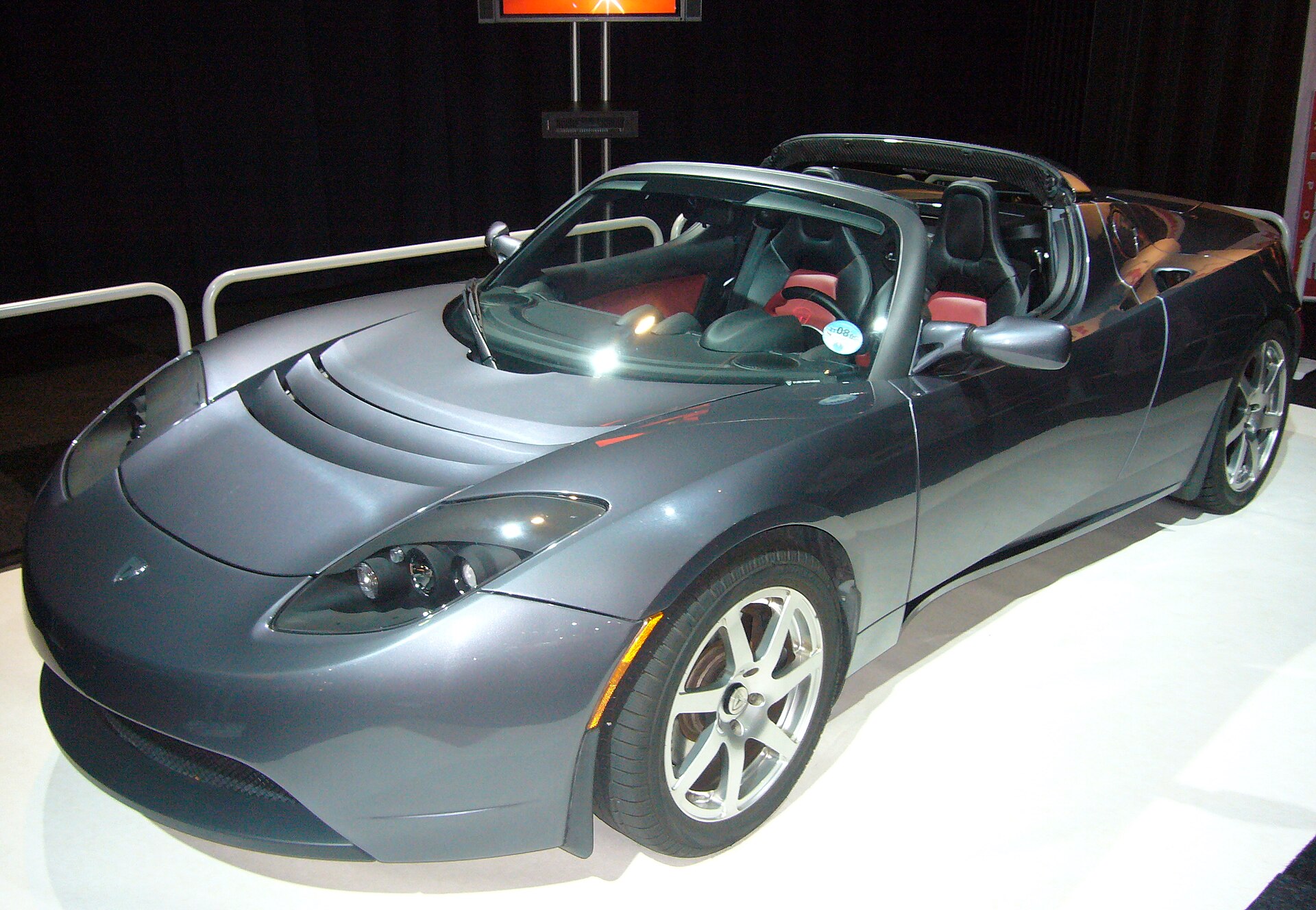
The manufacturing specifications of that car—a modified Lotus Elise chassis (with only about 6% parts commonality), a 53 kWh battery pack made from 6,831 18650 cells, a three-phase induction motor, and a BorgWarner single-speed gearbox—come from Wikipedia, Tesla’s official blog, and service manuals. Not a single one of those details comes from that GitHub repository.
2. And Yet, the Community Has Done Amazing Things with This “Incomplete Open Source” Release
Even though the released material is sparse, the open-source community’s response genuinely moved me:
- OVMS (Open Vehicle Monitoring System) treats the Roadster as one of its most maturely supported models. Owners have reverse-engineered the full-vehicle CAN messages; plug in a module and you can remotely lock the car, check battery health, and read tire pressure: openvehicles/Open-Vehicle-Monitoring-System
- The Polish company Antmicro, using its open-source simulator Renode, connected the car’s three computers together and ran the firmware Tesla released directly on a laptop, with no physical car required: renode-tesla-roadster-simulation
- The U.S. company Gruber Motors specializes in rebuilding old Roadster battery packs cell by cell, and has published a large amount of internal teardown material on the battery pack: What’s inside your Roadster battery pack
3. If You Really Want to Build One: I Found All the Missing References
At this point in the investigation, the question became: for all the blueprints Tesla did not provide, are there alternatives available on the public internet? The answer was much better than I expected.
Chassis: Don’t Build One Yourself—Buy a Used Lotus Elise
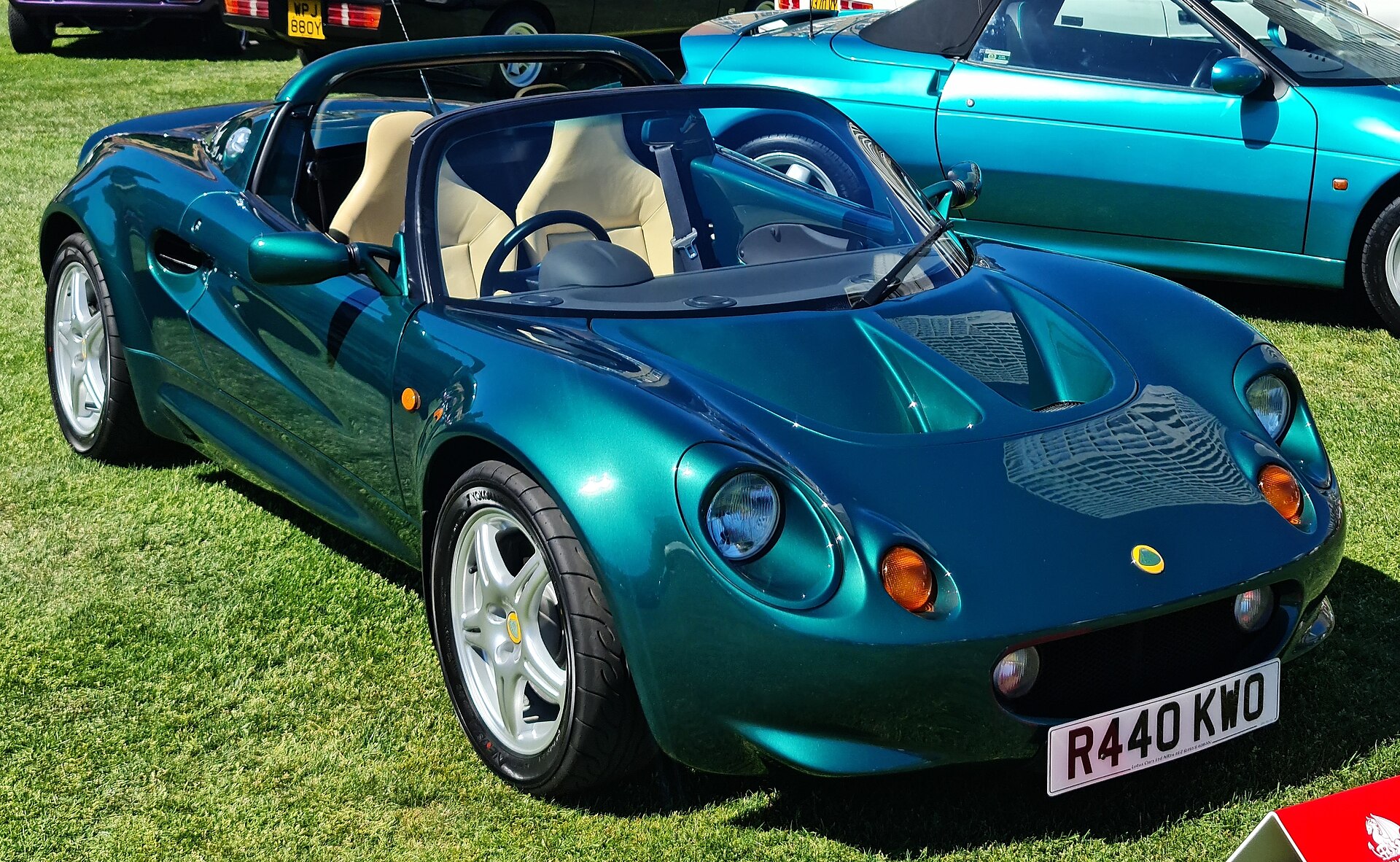
The Roadster was originally built on a modified Elise chassis, so we might as well follow Tesla’s path. The 624-page official Elise service manual is available for free on Archive.org (manualzilla-id-6035703); it contains the bonding and assembly procedures, torque specs, and dimensions for the bonded aluminum chassis. Lotus clubs also preserve multiple documents including the 427-page S2 manual.
📎 I also found something good: a complete PDF of that 624-page manual. I discovered a direct-link version on the site of a French Elise enthusiast, and have downloaded and archived it here as well (the original site is a personal site, so who knows when it might disappear)—Download: Lotus Elise S1 Official Service Manual (PDF, 624 pages, 19 MB). If you actually want to start building, this is your “chassis bible.”
Battery Pack: White Paper + Expired Patent + Open-Source BMS
This part of the puzzle is unexpectedly complete. In 2006, Tesla wrote a white paper titled The Tesla Roadster Battery System (Stanford archive), which is a first-hand document on the battery pack design. Even better: I checked the legal status on Google Patents, and Tesla’s 2006 battery pack interconnect patent US7956574B1 is now listed as Expired - Lifetime—the structural descriptions and drawings inside are now free for anyone to use, without even needing to rely on Tesla’s 2014 “patent pledge.”
For the battery management system (BMS), there are three mature open-source projects: ENNOID-BMS (natively supports 400V high-voltage packs, exactly the Roadster’s voltage platform), diyBMS (designed specifically for building packs from second-hand 18650 cells), and foxBMS 2 (from Germany’s Fraunhofer institute; the documentation is the most complete, though it states that it is not production-grade).
Motor and Inverter: A Fully Open-Source Closed Loop
Don’t wind the motor yourself—buying salvaged parts (a Nissan Leaf motor or a Tesla drive unit, for a few thousand dollars) is the standard approach in the conversion community. If you want to study electromagnetic design yourself, the Chinese Asynchronous Motor Design Handbook and Wiley’s Design of Rotating Electrical Machines provide complete calculation workflows.
The inverter (replacing the original PEM) turned out to be the most complete closed loop in this research: the OpenInverter project is fully open source in both software and hardware. Its firmware, stm32-sine, natively supports AC induction motors (the exact type used by the Roadster); the main board schematics are provided directly as PDFs; and there is also a matching vehicle control unit. The community has already validated it on Tesla drive units. One caution: don’t go down the wrong path. The more famous VESC is for permanent-magnet motors and cannot drive induction motors.
The One Piece That Cannot Be Filled In: The Carbon-Fiber Body
Sotira, the French company that supplied the Roadster’s carbon-fiber body, has no public technical documentation. The solution is to use the Elise’s fiberglass body directly (it is already very light), or learn carbon-fiber fabrication yourself.
4. Three Routes, One Realistic Answer
| Route | What It Involves | Budget | Feasibility |
|---|---|---|---|
| Elise EV conversion | Buy a used Elise, remove the engine, install an open-source electric drivetrain + self-built battery pack | $50k–150k | ✅ Many examples in Europe and the U.S. |
| Build a “Roadster-like” car | Salvaged electric drivetrain + self-built chassis and body | $30k–100k | ⚠️ Requires building your own chassis |
| Recreate the factory car from scratch | Fully rebuild to original factory specifications | Millions+ | ❌ The blueprints do not exist |
| Computer simulation (pure research) | Use Renode to simulate the vehicle computers | Free | ✅ Already open source |
The conclusion is clear: “used Elise + salvaged electric drivetrain + self-built battery pack” is the only realistic car-building route for an ordinary person, and every reference needed along that route—the 624-page manual, the expired patent, the open-source BMS, and the open-source inverter—is sitting on the public internet right now, for free.
Epilogue: The Dream Now Exists in Another Form
When I was a kid, I thought sports cars were something you bought. After digging through all this material over the past two days, I realized that a sports car can also be something you “assemble.”
Musk did not truly open-source the Roadster. But over more than a decade, the open-source community has broken down the act of “building an electric sports car” into countless freely available pieces, scattered across GitHub, Archive.org, and Google Patents. The dream that used to be pinned to my childhood wall has now become two research files sitting on my hard drive—one about the truth behind the “open source” claim, and one mapping out the materials needed to build the car—totaling 28,000 characters.
Someday, when I have the money and the time, maybe I really will buy a used Elise, remove the engine, and tighten the first bolt.
When that day comes, I’ll write another article.
Research methodology note: The draft of this article was generated by two AI deep-research workflows (216 subtasks in total, approximately 5 million tokens). All key conclusions were manually verified against first-hand sources including the GitHub API, Google Patents, and project READMEs. The workflow’s automated fact-checking stage produced excessive rejections, which were manually corrected.
Header image: 2008 Tesla Roadster, Rutger van der Maar / Wikimedia Commons, CC BY 2.0.