
The deal
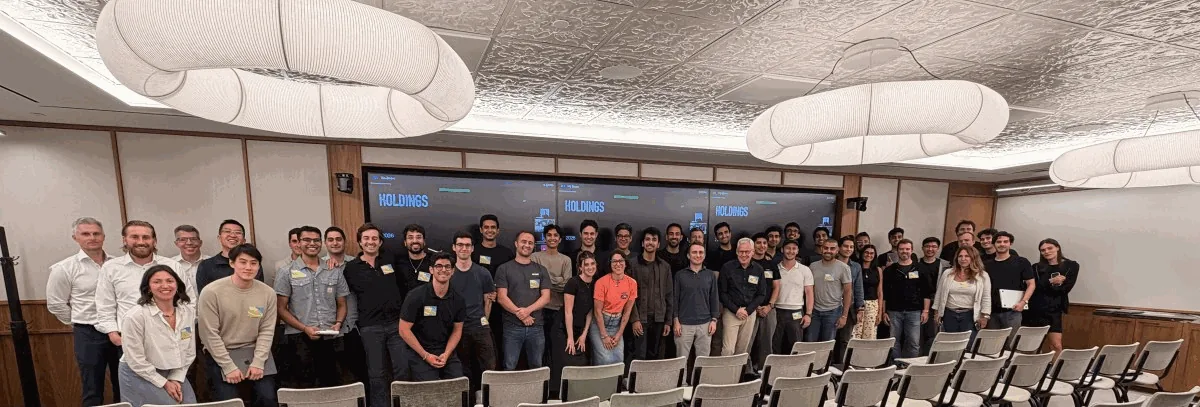
Thrive Holdings, an OpenAI-backed company that applies AI inside traditional service businesses, has raised $2 billion in new funding at a $12 billion valuation. Investors in the round include SoftBank, D1 Capital Partners, and Altimeter Capital.
The company operates less like a conventional software vendor and more like a private-equity-style platform for AI transformation. It buys or brings together traditional businesses, then embeds AI into their workflows. The New York Times first reported the news, according to TechCrunch.
Why Thrive is different
Thrive Holdings was spun out of Thrive Capital, one of OpenAI’s major investors. In December 2025, OpenAI took an ownership stake in Thrive Holdings. As part of that arrangement, OpenAI employees began working with Thrive’s portfolio companies to help accelerate AI adoption.
That hands-on approach is central to the model. Instead of simply selling access to a model, Thrive puts technical teams close to the work being done inside enterprises. In plain terms, an AI agent is software designed to carry out a sequence of tasks toward a goal, such as preparing documents, researching information, tracking compliance steps, or helping resolve support tickets.
This type of implementation business is becoming a category of its own. OpenAI and Anthropic have both partnered with large private equity firms on related efforts, including The Deployment Company and Ode with Anthropic, which build teams of engineers to work directly inside enterprises and redesign workflows around AI.
Current and Shield show early traction
Thrive says more than 70 businesses now sit on its platforms. So far, it has focused on two main pillars:
- Current, its accounting arm, includes more than 50 firms and more than 2,000 professionals.
- Shield, its information technology arm, includes around 20 companies.
In accounting, Current’s self-improving tax agents, called TaxAI, have processed more than 7,000 tax returns at 98% accuracy, according to Thrive. The company says the system reduced tax preparation time at participating firms by more than 30%.
In IT, Shield’s AI products have accelerated help desk resolution times by 36x. Thrive also says Shield doubled the number of custom AI agents deployed on the platform in the past month.
These figures help explain investor interest. Accounting and IT are both document-heavy, process-driven fields where repetitive manual work can be measured and redesigned. That makes them natural early markets for AI deployment, especially when paired with existing professional teams rather than introduced as a standalone tool.
A new push into physical infrastructure
Part of the new funding will support a third platform focused on regulatory services for the built environment. A spokesperson described the work as what is required to get physical assets approved, built, certified, and kept in operation.
Anuj Mehndiratta, a founding member of Thrive Holdings, told TechCrunch that the U.S. needs to build and modernize more critical infrastructure, but projects are often constrained by local, technical, and regulatory complexity. He said the issue applies across data centers, manufacturing, healthcare, power, water, transportation, and other physical infrastructure.
Thrive sees this complexity as a fit for its model: large, fragmented, mission-critical, and operationally complex markets. Mehndiratta said AI will not replace field work, local judgment, or professional sign-off. But it can reduce manual workloads in research, reporting, permit preparation, inspection documentation, and compliance tracking.
Kareem Zaki, another founding member of Thrive Holdings, said in a statement to TechCrunch that AI paired with experts and practitioners could help compress regulatory bottlenecks while keeping safety standards high and reducing the burden, cost, and time involved in building.
What it signals
Thrive’s funding round points to a broader shift in enterprise AI. The center of gravity is moving from model access to operational deployment. Investors are not only backing AI systems that can generate answers; they are backing companies that can put AI into messy, regulated, real-world workflows and show measurable productivity gains.
The model is also demanding. Industries such as accounting, IT services, and infrastructure regulation involve professional responsibility, compliance, and human judgment. AI is unlikely to replace those functions outright. The more realistic path is for AI to become an operating layer inside service businesses, taking on repetitive documentation, research, tracking, and preparation work while experts remain responsible for review and final decisions.