
Core Event: Strategic Agreement and Collaboration Framework
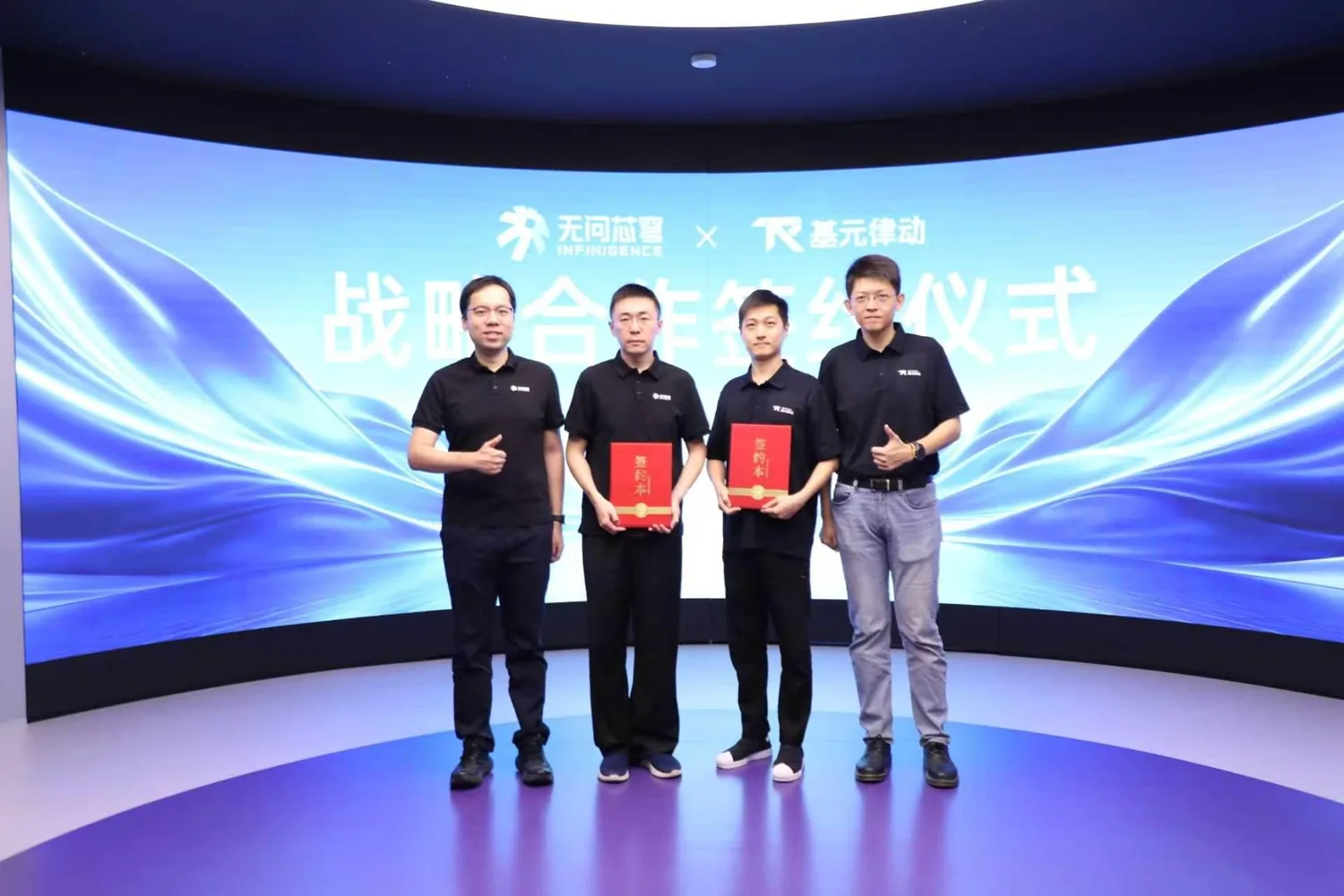
On September 15, 2026, AI infrastructure company TokenRhythm and Infinigence AI signed a strategic partnership agreement. The collaboration does not involve new product launches, pricing adjustments, or open-weight releases—it focuses on capability integration and落地synergy.
- Participating parties: TokenRhythm (intelligent routing + multi-model orchestration) + Infinigence AI (Agentic Infra infrastructure)
- Focus areas: High-quality token supply, dynamic routing optimization, and enterprise-agent application闭环
- Current stage: Following NeoHorse-1 R&D collaboration, expanding into solution design, pilot validation, and customer delivery
- Target scenarios: Code development, enterprise collaboration, private deployment
Collaboration Context and Business Synergy
TokenRhythm built a rapid-validation engineering loop: within 90 days of founding, it achieved full-cycle deployment—from product launch and user acquisition to multi-model orchestration and capability optimization. Core capabilities include intelligent routing (dynamic model orchestration per task needs), three-channel acquisition (open-source + API + enterprise), and feedback-driven model iteration.
Infinigence AI optimizes efficiency and cost between model algorithms and chip hardware, supporting training, inference, deployment, and RL tasks. Its inference optimization handles large-scale requests; the elastic training system improves both efficiency and stability.
The complementary nature is clear: Infinigence AI’s customer base and products generate sustained token-invocation demand for TokenRhythm; vice versa, TokenRhythm’s stable infrastructure enables Infinigence AI to handle higher-concurrency workloads. Surprisingly, TokenRhythm’s 90-day validation cycle is significantly faster than the industry average of 6–12 months for AI startups—providing substantial agility in integrating infrastructure partners.
Model Supply Chain and Intelligent Routing
TokenRhythm has first integrated Qwen-3.8-Max and GLM-5.3-Flash (NiuLai), ensuring upstream quality. Its routing system goes beyond load balancing: it weighs task type, model strengths, and cost to select optimal invocation paths. For example: code-generation tasks may favor Qwen-3.8-Max, while lightweight dialogues use GLM-5.3-Flash for lower latency and cost.
Under the agreement, Infinigence AI’s Agentic Infra will underpin TokenRhythm’s agent-scale operations, while TokenRhythm handles application-layer packaging for enterprise适配. The companies plan to expose agent capabilities via an enterprise collaboration platform, building a standardized delivery stack.
Implementation Guidance and Target Audiences
- Ready to engage now: Enterprises seeking agent integration—especially those already using Qwen/GLM ecosystems (lower adapter cost) or requiring private deployment with strict latency SLAs (Infinigence AI’s infra优势).
- Recommended to wait: Organizations with generic AI-agent interest but no concrete use case—await pilot-delivery metrics; current collaboration remains in solution-design phase, with no public performance data yet.
Final Thoughts
This deal exemplifies deeper coupling between infrastructure and application layers in AI. When model invocation, routing, and compute resources are coordinated as one system, the time from validation to production drops—perhaps a more meaningful industry shift than单项technology breakthroughs.