
Core Incident: Border Supervisor Arrested for Government Equipment Theft
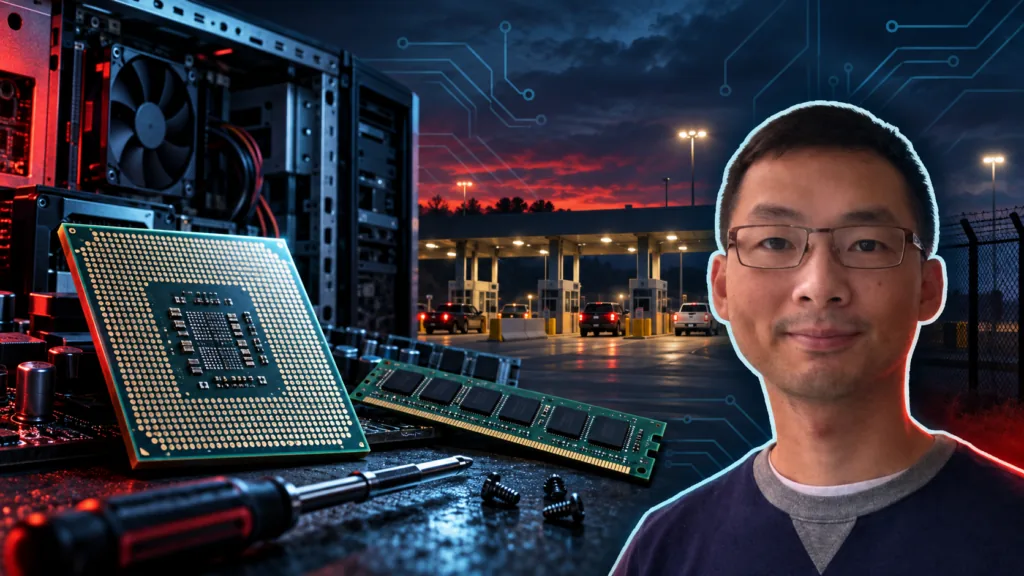
On September 13, 2026, the U.S. Federal Bureau of Investigation (FBI) arrested and charged Terry “Jiajia” Liu, a supervisor at the Calais Port of Entry in Maine working for U.S. Customs and Border Protection. Liu faces charges of theft and damage to government property. According to prosecutors, Liu removed hardware components from at least 46 computers belonging to the Department of Homeland Security across three border facilities in Maine, including Intel 14th-gen Raptor Lake Refresh processors, RAM modules, and hard drives.
- Suspected timeline: May 2025 to July 2026 (14 months)
- Affected computers: At least 46 units
- Stolen components: Intel 14th-gen Raptor Lake Refresh processors, RAM modules, and hard drives
- Method: Replace original hardware with lower-performance components, then exchange stolen parts via Newegg’s trade-in program for store credit
- Verified trade-in count: 16 submissions of Core i7 Raptor Lake Refresh processors
- Per-processor payout: $200–$210 USD (approximately RMB 1,346–1,413)
Incident Details: Surveillance Video Confirmed the Crime
Liu’s official duties were limited to IT support, and he was explicitly forbidden from modifying any government computers. Port Director Theodore Cummings had issued a written order explicitly instructing Liu: “Do not move any computer or computer components.” Despite this, Liu proceeded with the scheme.
Covert surveillance captured Liu’s midnight operations:
- Transferring computers to a training room for dismantling
- Removing thermal paste with a screwdriver before swapping CPU chips
- Placing removed components into his own desk drawer
Investigation confirmed: 39 computers had processors replaced, 6 had RAM swapped, and 8 had hard drives changed. Some units were downgraded to Pentium-class processors, with reduced RAM capacity and storage compared to original specifications.
Contrast: Performance Claims vs. Actual Degradation
During interrogation, Liu first claimed the modifications aimed to “improve computer performance and reduce repair time.” However, he later admitted that the modified systems actually performed worse than before. This contradiction—sacrificing equipment capability for minimal financial gain—reveals that personal profit, not operational efficiency, drove the behavior.
| Original Configuration | Replaced Configuration | Affected Units | Processor Trade-in Value |
|---|---|---|---|
| Intel Core i7 Raptor Lake Refresh | Pentium-class or older models (some) | Up to 39 | $200–$210 |
Records show Liu sent 13 emails using both personal and official government email addresses, containing shipping labels and trade-in receipts. All listed processor models matched the stolen government components. Three $200 USD store credit transactions from Newegg were traced to Liu’s American Express account.
Financial Impact and Recovery Costs
The incident caused substantial public property loss:
- Repair costs for recovered hardware: $20,460 USD (approx. RMB 138,000)
- Full replacement cost at original specs: $105,800 USD (approx. RMB 712,000)
- Additional expenses: Installing government-specific operating systems on each machine would increase total costs further
Recommendations for Readers
For IT professionals: Supervisory access does not equal operational authority. Even if changes appear to improve workflow, modifying managed equipment without written authorization violates legal boundaries. Document all permission requests and retain approval records.
For organization managers: High-value small components (CPU, RAM) should require inventory logging and controlled access. Consider remote monitoring or dual-verification protocols for sensitive positions handling government assets.
Final Note
This trade-in theft highlights vulnerabilities in supply chain recycling: when government asset disposal procedures differ from commercial platform credit systems, minimal authorization permissions can be exploited systematically. Technical monitoring must pair with procedural safeguards to close this non-violent but common digital embezzlement gap.