
A packaged route into agentic development
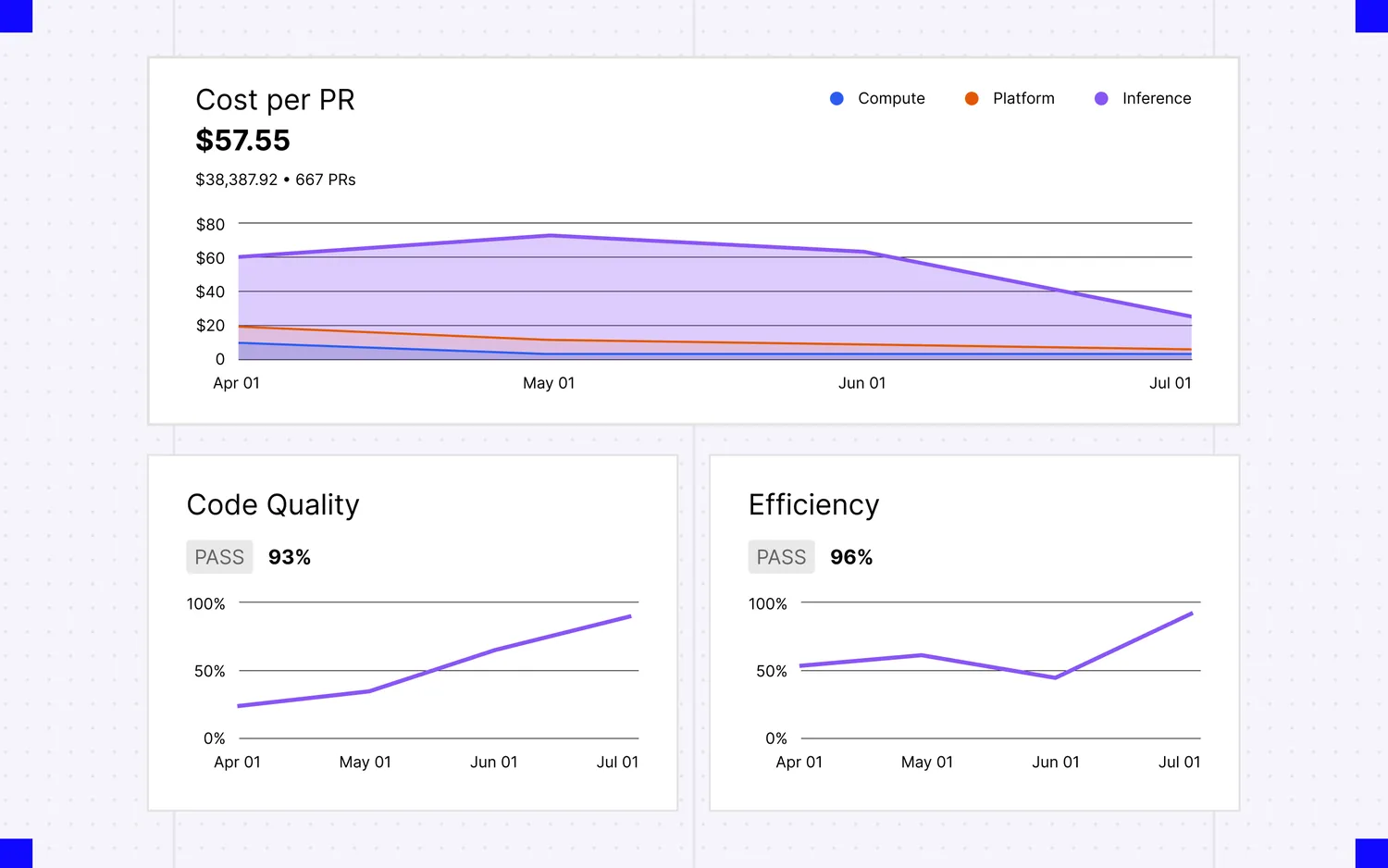
Warp introduced Warp Factories on Tuesday, presenting it as an infrastructure layer for companies that want to build AI-driven software factories without constructing the entire system themselves. In this context, a software factory means an agent loop mapped onto familiar engineering stages: triage, specification, implementation, review, and verification.
The idea is not simply to make code completion faster. It is to let AI agents participate across the development lifecycle, while engineers continue to define goals, supervise outputs, and handle work that still requires human judgment. Warp is betting that many teams want this operating model but do not have the internal resources to build the necessary infrastructure from scratch.
What Warp Factories includes

Warp Factories gives companies a shared environment for deploying and steering agents. The system is organized around standard software-development phases, but Warp says any of those phases can be automated through agents.
Users are not locked into a single coding model. According to the company, the platform can work with Codex as well as Claude Code, and teams can bring their own harnesses where needed. It also integrates with common workflow systems such as Linear and Jira, and with messaging tools including Slack and Teams. The goal is to fit into existing engineering routines rather than force teams to rebuild their stack around a new tool.
Warp also emphasizes operational visibility. Because agents run in the same environment, managers can compare performance across configurations and monitor overall token spending. Tokens are the units large language models use to process text, and they are often tied directly to cost and workload size. Warp Factories also supports self-improvement loops intended to optimize the system over time.
Why the target is smaller companies
The software-factory concept is already being explored by larger engineering organizations. Stripe has discussed a “minions” system for automating development inside its codebase, while Ramp has built a background agent that can monitor its own code after deployment.
Warp CEO Zach Lloyd told TechCrunch that the intended market for Warp Factories is smaller companies that cannot easily reproduce that kind of internal platform work. Running agents in the cloud, steering them while they operate, bringing their work back into a local environment, building shared memory across agents, and setting up evaluations across agents can become a major infrastructure project.
That is the gap Warp wants to fill: not a single coding assistant, but a ready-made operating layer for multi-agent software work.
Not a replacement for engineers
Warp is not positioning Factories as a way to eliminate software engineers. Lloyd said Warp currently automates about 30% to 35% of its tasks on a weekly basis, and he expects that share to rise as models, context, and harnesses improve.
That figure is important because it frames the current state of the market. AI agents can take on meaningful chunks of development work, but human engineers still remain central to planning, review, judgment, and accountability. The near-term value of a software factory is therefore likely to come from better coordination between people and agents, not from fully autonomous engineering departments.
The bigger shift
Warp Factories reflects a broader change in AI coding: competition is moving from individual coding tools toward complete development workflows. For companies, the hard problems are increasingly about reliability, evaluation, cost control, context management, and integration with existing systems.
If Warp can make those pieces easier to adopt, it may appeal to teams that want the benefits of agentic development without building their own internal platform. The open question is whether a packaged architecture can remain flexible enough for real-world codebases and organizational processes, where every team’s workflow is slightly different.