
A Fake Beauty Video and a 50-Year Trail
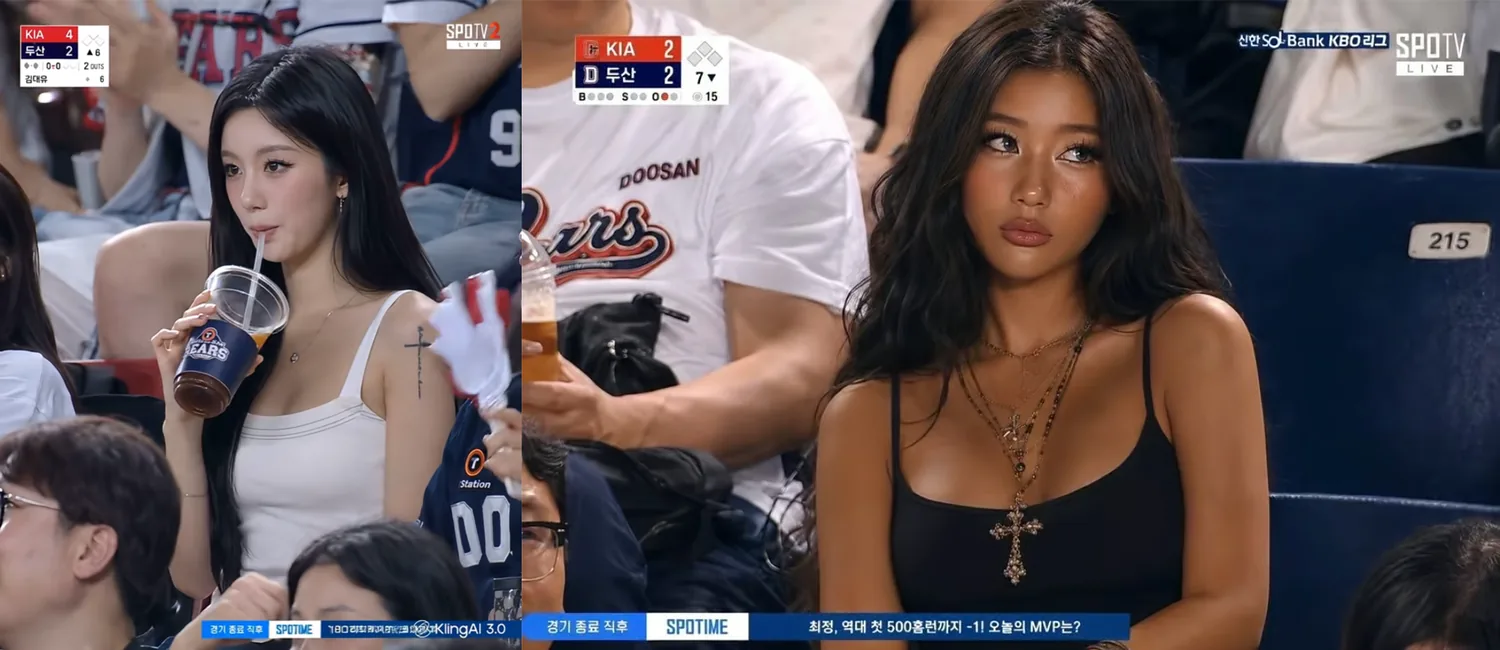
In May 2025, a five-second clip from a Korean baseball match went viral on X, amassing 15.25 million views. It showed a woman in a white top and jeans on the stands, sighing and looking away from the game. But seasoned fans spotted inconsistencies: the scoreboard named Cho Inseong, who retired in 2017 and now coaches; the rally标语 extra characters; and American-accented commentary. The woman did not exist—she was AI-generated.
Crucially, users then replaced her with their own faces, turning the scene into a viral template. Yet observers noted a pattern: AI first generated a convincing fake woman, only later enabling user customization—revealing that ‘beauty’ is not accidental but the default setting.
The ‘Internet First Lady’: Lena’s 51-Year Run
Every leap in AI imaging sparkles with a mass participation trend—GPT-4o’s 2025 March image mode birthed millions of Ghibli-style reimaginings; Google’s Nanobanana generated 200 million desk-handout avatars in two weeks. But Lena, the test image, predates them all.
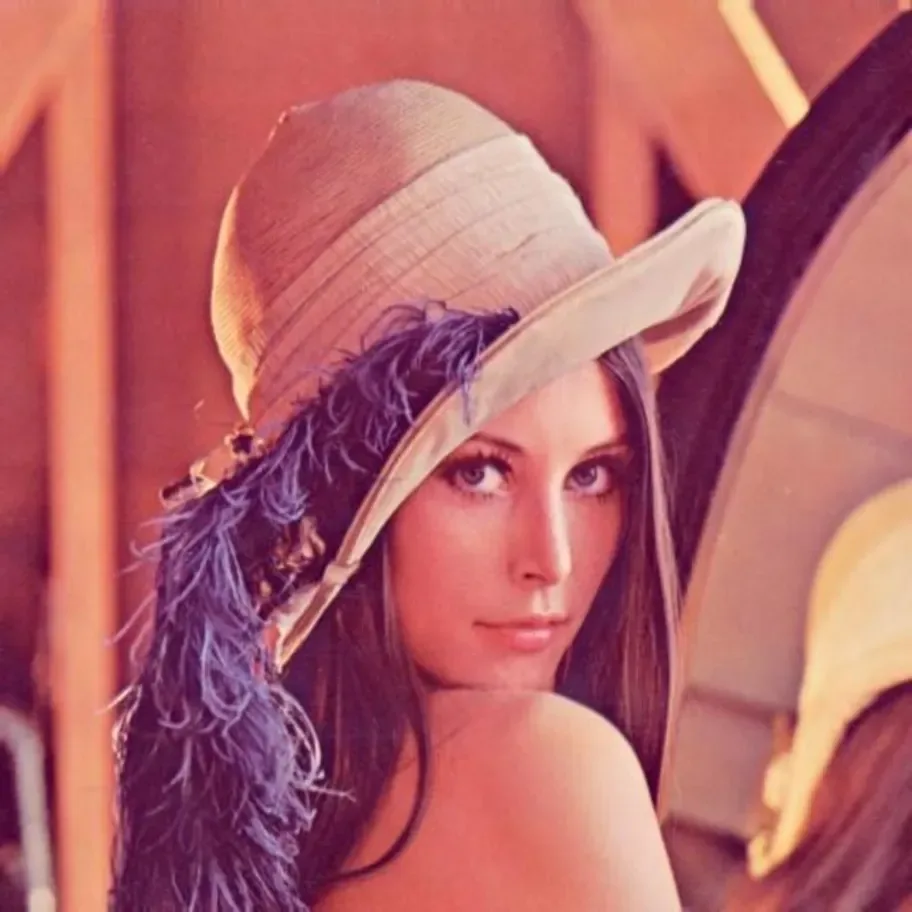
In 1973, researchers at the University of Southern California, scrambling for test images, tore a 5.12-inch strip from Playboy’s November 1972 issue—featuring Lena Söderberg, cap-shaded and bare-shouldered—and scanned it. IEEE editor David Munson explained its endurance in 1996: technically, richest in texture, shadow, and flat regions; psychologically, a ‘attractive woman’s photo naturally appeals to a male-dominated circle.’
Controversy persisted: Playboy threatened legal action in 1991; Lena herself voiced disapproval later. On April 1, 2024, the IEEE Computational Society discontinued papers using the Lena image—51 years after its first scan.
Averageness: Where Human Preference Meets Model Math
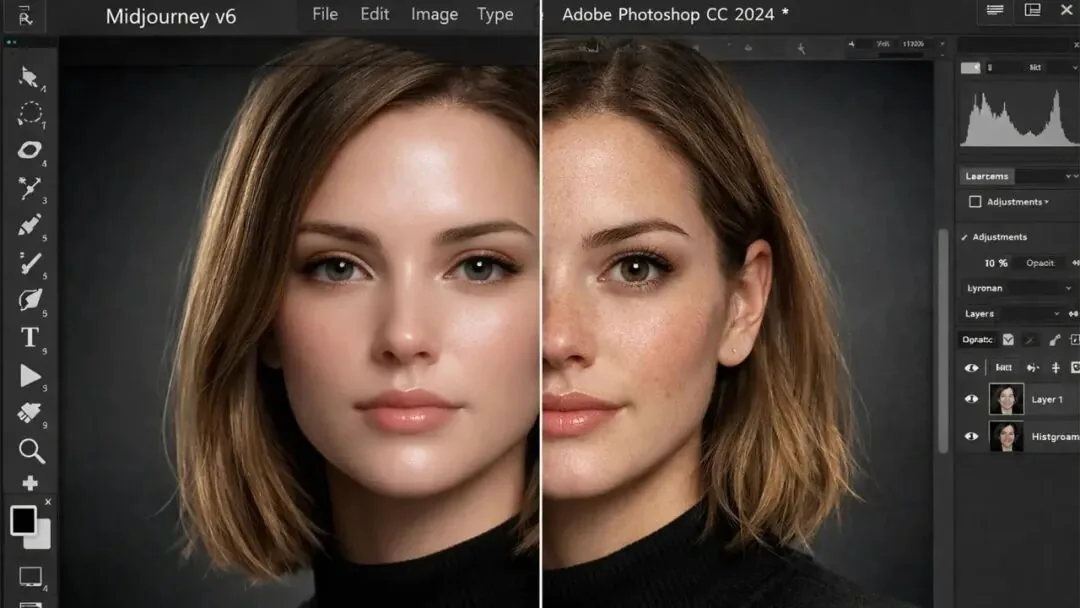
The second pillar is human psychology itself. In 1990, psychologists Langlois and Roggman proved composite faces outperform originals in attractiveness; more source faces = more beautiful composites. This holds across genders and ethnicities—hence the paper title, ‘Attractive Faces Are Only Average.’
Generative models learn data distributions and sample from the center, naturally producing ‘average faces.’ A 2023 Australian National University study found AI-generated white faces were mistaken for real more often than actual white faces—an ‘AI super-reality’ effect, because the synthetic faces matched the group average more closely, and averages are perceived as more typical.
The signature flaw is foretold here. Critics in 1990 argued composites appeal because averaging removes blemishes. Today, that ‘statistical artifact’ is a red flag: AI image verification guides list ‘overly smooth skin’ as a telling giveaway.
##商业化 Feedback Loops: From PickScore to Spicy Mode
Lena was selected deliberately; today’s default emerges from data. In late 2022, Lensa’s ‘Magic Avatars’ generated 100 avatars for MIT Tech Review’s Melissa Heikkilä: 16 topless or nearly topless, 14 others revealing and suggestive—while her male colleague received astronauts and inventors, despite no prompt at all.
The bias stems from training data: the web is saturated with sexualized female imagery. User behavior accelerates it: Civitai’s NSFW share rose from 41% (Jan 2023) to 80% (Dec 2024).
Commercially, reward models (e.g., PickScore) train outputs by ranking ‘which image is more beautiful.’ Although user accounts generating adult content are deleted, prompts still contain NSFW terms. A 2024 reward-model paper showed fine-tuning with PickScore increases NSFW output even for neutral prompts.
This creates tension: strict front-end filters versus back-end reward alignment. Grok’s ‘Spicy’ mode exemplifies this pull—relaxed filtering, gender-specific nudges, available only for paying users. In January 2026, it enabled ‘digital undressing’ of uploaded images—including minors—triggering global regulatory pressure and X’s decision to make image generation fully subscription-based.
Who Should Use Which?

Casual creators needing generic appealing imagery can expect better baseline output from female-anchored models. Professional users requiring specific gender, action, or realism should always layer explicit constraints (‘male engineer holding a circuit board’, ‘documentary photography style’), or use fine-tuned open-weight variants.
Write in closing: Human aesthetics have biological roots—infants as young as two months gaze longer at average/adopted faces. AI amplifies this preference;Lena was chance, but today’s default is data’s gravity—not distorting desire, but reflecting where we click most.
(English正文:1498 words)