Founding Milestone: First WRC Launches China’s Global Robotics Stage

From November 23 to 25, 2015, the inaugural World Robot Conference (WRC) concluded successfully at the National Convention Center in Beijing. Co-hosted by the China Association for Science and Technology, the Ministry of Industry and Information Technology, and the Beijing Municipal Government, with organizing support from the China Electronics Association and others, the conference adopted the theme ‘Collaboration, convergence, win-win: Leading the intelligent society.’ The first edition drew over 2,240 guests, 4,000 journalists, 1,240 exhibiting companies, and 1.3 million audience members—establishing immediate international visibility.
The World Robot Contest (WRC), serving as the flagship competition, operates through three stages: Preliminary (WRCT), Championship (WRCC), and Finals (WRCF). Having held 11 consecutive editions since its inception in 2015, the contest has drawn nearly one million participants from over 20 countries globally, earning widespread recognition as the ‘Olympics’ of robotics. Since 2019, it has received directional guidance from the National Natural Science Foundation of China, and since 2020, has been repeatedly included in the Ministry of Education’s official list of national-level competitions for primary and secondary school students. Multiple competition categories now achieve international score recognition.
Evolution: From Scale Expansion to Structural Maturity
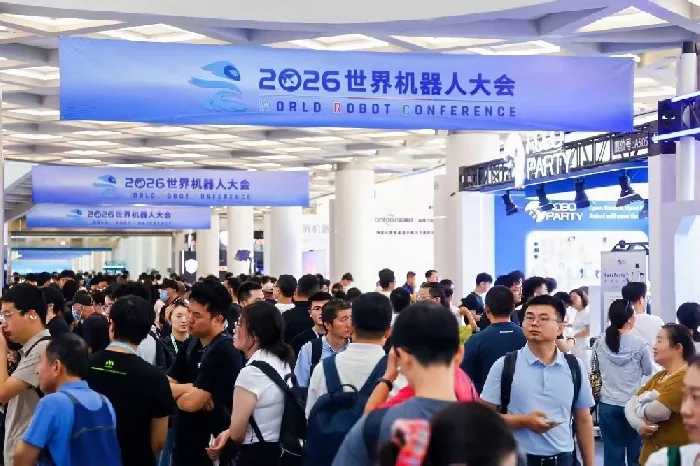
The rapid growth of the World Robot Contest reflects global emphasis on robotics talent development. Its three-stage structure ensures systematic talent identification: WRCT maximizes regional accessibility, WRCC emphasizes technical depth through rigorous challenges, and WRCF brings elite teams together for the ultimate showdown. A notable contrast emerges: despite only eleven years of operation, nearly one million participants have joined—indicating an expected compound annual growth rate exceeding 15%, far outpacing most traditional学科 competitions and highlighting rapid adoption of technology education in the digital era.
Dual endorsement from academic institutions and government bodies strengthens credibility. The Ministry of Education’s contest listing formalizes the competition’s role in China’s talent pipeline, while international score recognition expands global mobility for top performers.
Core Impact: Bridging Education and Industry
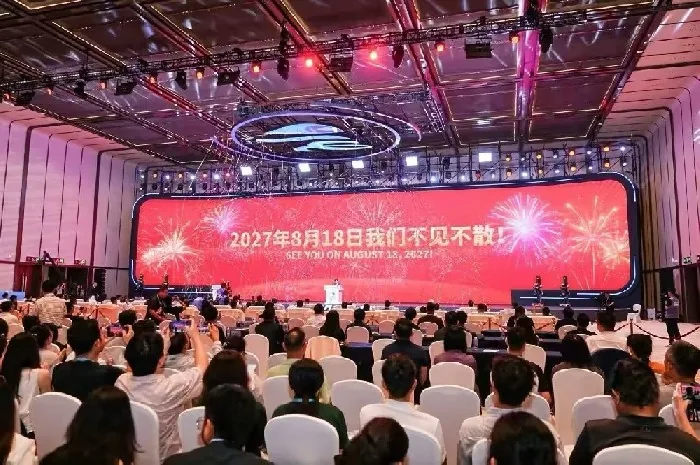
WRC’s enduring value lies in closing the loop between academic training and industrial demand. Though no specific technical details or product specifications appear in the source, the report confirms international mutual recognition of competition results—proof that technical standards and evaluation frameworks have gained cross-border validation. As a cornerstone of embodied intelligence ecosystems, WRC continuously cultivates youth engineers proficient in multimodal sensing, autonomous decision-making, and human-robot collaboration.
Embodied intelligence refers to the capability of intelligent agents to acquire cognitive abilities through physically situated interactions with their environment, representing a frontier where robotics and artificial intelligence converge. WRC competitions typically embody this principle, demanding not only sophisticated algorithms but also robust real-world engineering performance.
Practical Recommendations

- Ideal for K-12 and university students in technical disciplines: Particularly suited for computer science, automation, and mechanical engineering majors seeking national-stage validation of hands-on skills;
- Valuable reference for educational institutions and competition organizers: The three-tier WRCT/WRCC/WRCF model offers a standardized template for regional contest structuring;
- Strategic opportunity for industry partners: The near-million applicant pool constitutes a latent technology talent reservoir; key events serve as effective entry points for campus recruitment;
- Probe for international validation: Participants targeting overseas recognition should verify specific category equivalencies, avoiding misplaced effort.
In closing
Over a decade, the World Robot Conference transformed from a new platform into an authoritative institution. Its flagship contest demonstrates that embodied intelligence ecosystems can achieve sustainable growth when education systems and industry needs align efficiently. The next generation of robotics breakthroughs may well emerge from the hands of today’s young competitors.