
Xiaomi 18 Pro Series Launches: Full-Line TLC Storage with Domestic Supplier Debut
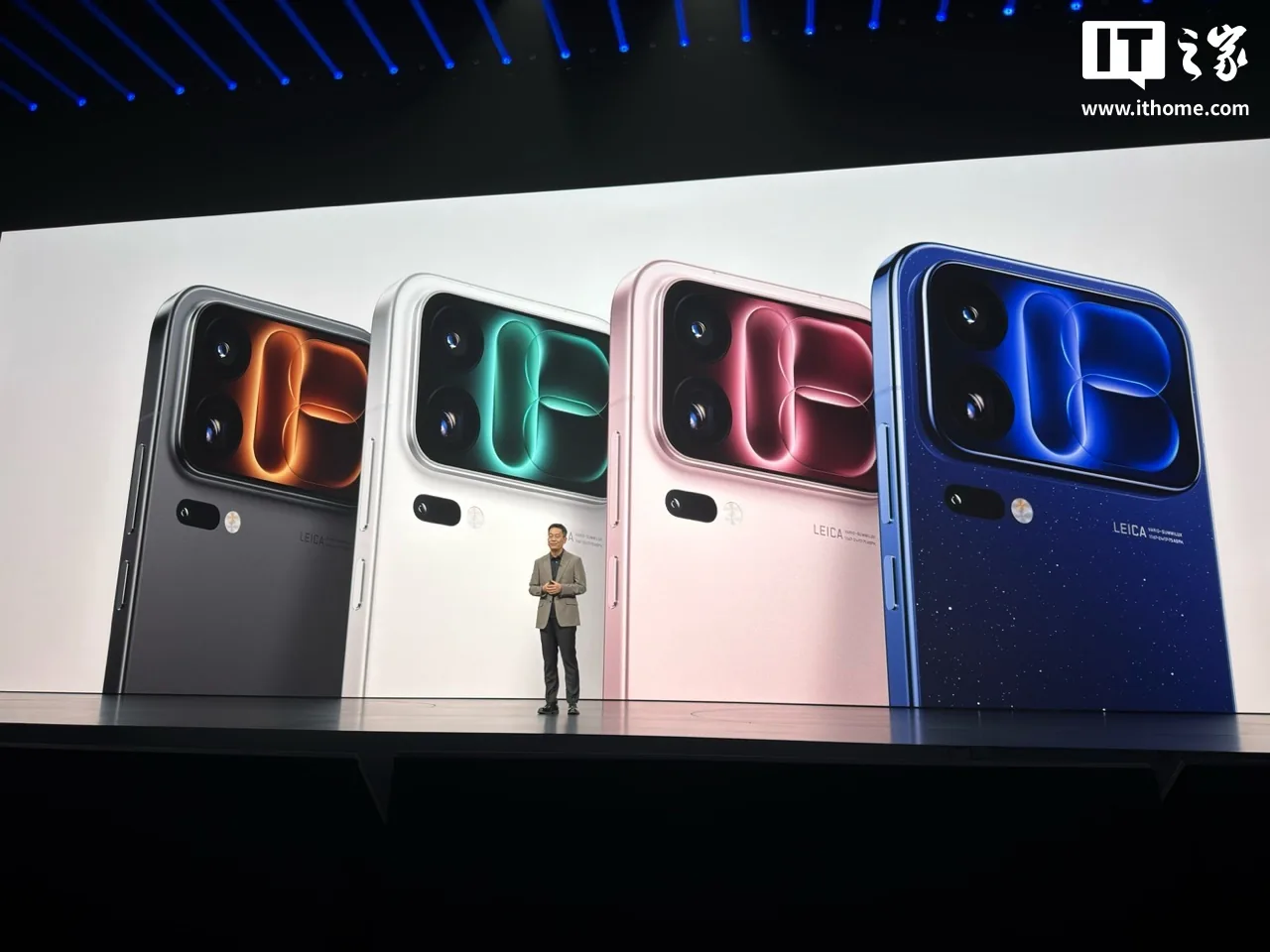
Xiaomi officially launched the Xiaomi 18 Pro series on September 23, comprising two models: Xiaomi 18 Pro and Xiaomi 18 Pro Max. Both feature the sixth-generation Snapdragon 8 Ultra chip, fabricated on a new 2nm process node. The battery capacity has been upgraded to 7000mAh, accompanied by a full-focal-length Leica triple-camera system. Display-wise, the 6.4-inch M11 emissive panel reaches 4000 nits peak brightness with hardware-level smart privacy protection.
Key launch specifications:
- Launch date: September 23, 2026
- Series lineup: Xiaomi 18 Pro + Xiaomi 18 Pro Max
- Starting price: RMB 5999
- Flash storage: All models use TLC NAND—no QLC variants
- 100+ back display apps launched initially, including quick tools, notification bars, and stress-relief mini-games
Supply-chain diversification: domestic Feicun Shantuo breaks into flagship tier
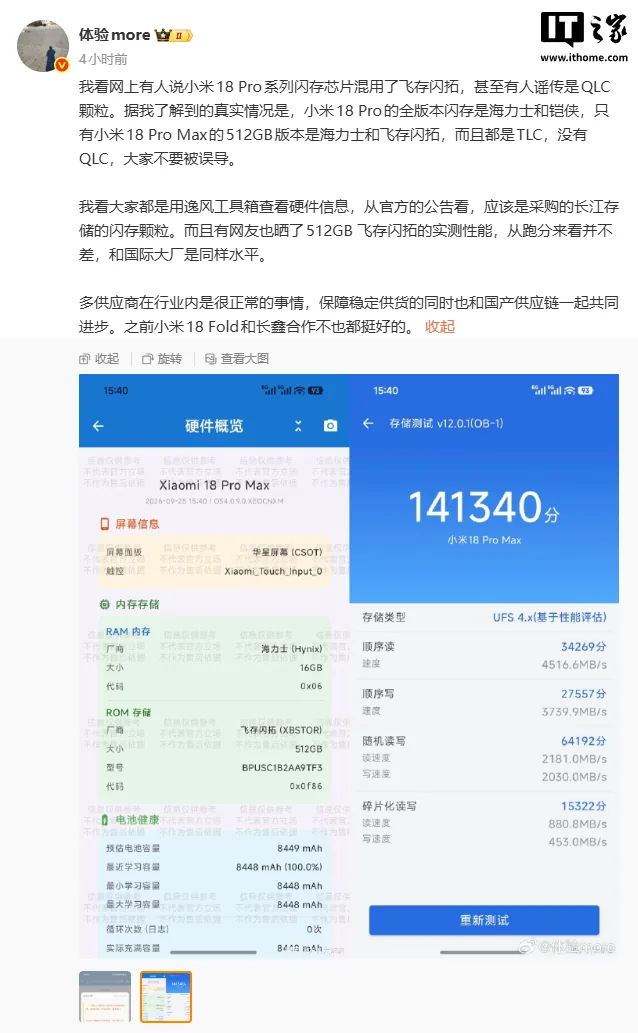
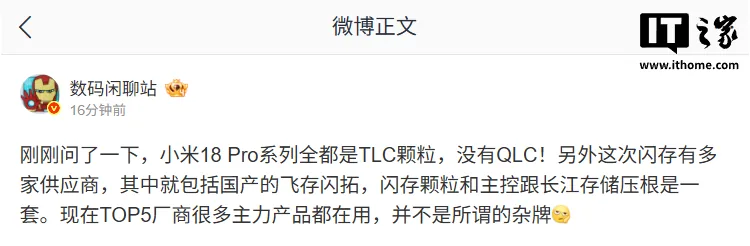
According to tech influencers @Digital Station and @ExperienceMore, the flash configuration reflects a multi-supplier strategy. Xiaomi 18 Pro features Hynix and Kioxia across all variants; Xiaomi 18 Pro Max’s 512GB model combines Hynix and Feicun Shantuo flash, all configured as TLC.
The biggest surprise lies in Feicun Shantuo’s flagship debut—its NAND die and controller are indistinguishable from长江存储’s reference design. As @Digital Station clarifies, this solution is already deployed in mainstream products of multiple TOP5 smartphone brands, debunking industry skepticism around its legitimacy.
Clarifier: TLC (Triple-Level Cell) stores 3 bits per cell, balancing endurance and cost. QLC stores 4 bits per cell with lower endurance—a downgrade Xiaomi avoided across the entire series.
Flash storage configuration comparison
| Model | Capacity variant | Suppliers | Cell type |
|---|---|---|---|
| Xiaomi 18 Pro | All versions | Hynix + Kioxia | TLC |
| Xiaomi 18 Pro Max | 512GB | Hynix + Feicun Shantuo | TLC |
| Xiaomi 18 Pro Max | Other capacities | Not disclosed | — |
Verdict: Match capacity needs with risk tolerance
For users preferring established suppliers only, Xiaomi 18 Pro’s Hynix+Kioxia combo offers proven reliability. For those seeking 512GB capacity and open to domestic solutions, Xiaomi 18 Pro Max’s 512GB variant delivers triple-level endurance without supply-chain stigma.
Avoid if you’re writing-heavy use case sensitive—though no QLC exists now, future mid-range variants under cost pressure may reconsider density-optimized solutions.
Final thoughts
Feicun Shantuo’s flagship entry signals mature technology spillover from China’s storage ecosystem. This isn’t just supply diversification—it’s a tangible outcome of integrated semiconductors craftsmanship spanning design, fabrication, packaging, and brand integration.