
Zhipu Open-Sources GLM-5.3 Flash: 320B Multimodal Model Matches Global Leaders
Zhipu AI publicly released and open-sourced GLM-5.3 Flash in late August 2026. The model, previously tested anonymously as “Ox Alpha”, gained unexpected popularity on global platforms before official confirmation. Key facts:
- Release date: Late August 2026, fully open-sourced
- New version: First native multimodal model in the GLM-5 series; 320B total parameters, 18B activated
- Pricing: 1/10 of GLM-5.3, 1/20 during limited-time discount, 1/40 of Claude Opus 4.8
- Availability: Accessible via ZCode platform, public API, and Hugging Face weights
- Hardware: Deployed on domestically produced chips, supports 1M-token context
The “Ox Alpha” phenomenon before the reveal

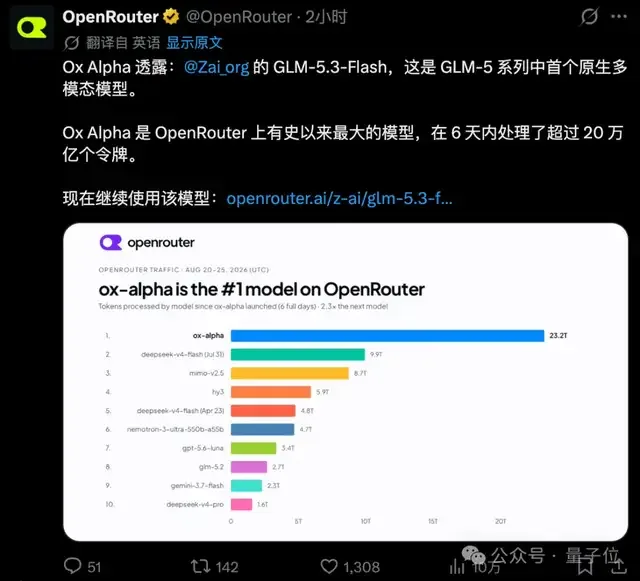
Before Zhipu claimed credit, the anonymous “Ox Alpha” abruptly climbed global rankings:
- Surged to #1 on OpenRouter within its first day, breaking the single-day tokens usage record
- Ended DeepSeek’s 56-day consecutive reign on OpenCode
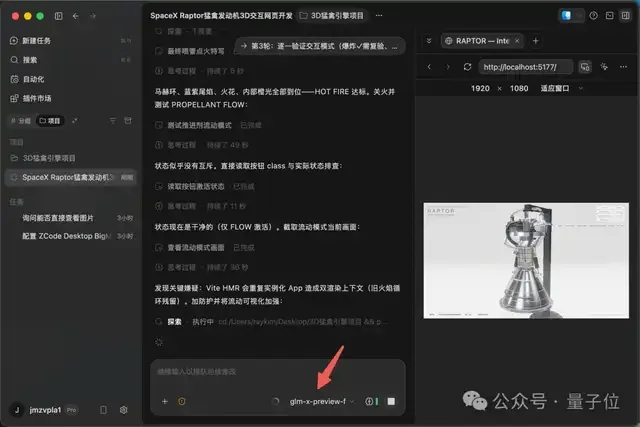
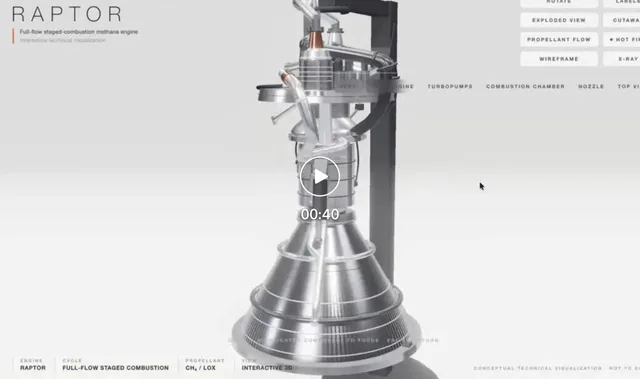
- Completed complex tasks including 3D engine modeling, video subtitle generation, and full movie recap
In-house testing confirmed GLM-5.3 Flash’s capabilities surpass the larger GLM-5.2 (753B), while achieving a 57-point score on the AA leaderboard—matching Claude Opus 4.8 despite having only 42% of the parameter count.
| Metric | GLM-5.3 Flash | GLM-5.2 | Claude Opus 4.8 |
|---|---|---|---|
| Total Parameters | 320B | 753B | Unreleased |
| AA Score | 57 | Not disclosed | 57 |
| Relative Price | 1 | ~10x | ~40x |
| Native Multimodal | Yes | No | Yes |
| Domestic Chip Support | Yes | Not stated | No |
Architecture breakthrough: efficient linear + sparse attention
The efficiency leap stems from three technical innovations:
- Hybrid attention: Linear attention captures local dependencies, while sparse attention retrieves global context via a lightweight indexer, reducing attention compute by 3.01x and KV Cache by 4.44x
- Separated inference pipeline: Encode-Prefill-Decode layers decoupled for independent scaling on国产 chip environments
- Visual feedback loop: A dedicated pipeline for Visual Coding enables the model to iteratively refine outputs by observing generated outputs
Combined with 30T multimodal training tokens, this architecture delivers 3x end-to-end performance gain on domestic chips while achieving per-token costs comparable to mainstream NVIDIA GPUs.
Practical adoption advice
Try now if you’re:
- Small-to-medium model teams & individual developers: Open weights lower deployment barriers; suitable for multimodal content, chatbots, and video annotation
- Teams prioritizing domestic alternatives: Organizations using domestic chips (e.g., Ascend, Cambricon) needing cost-performance balance
Wait before adopting if you’re:
- Enterprise users requiring mature Agent workflows: Current version emphasizes single-task completion; multi-step Agent coordination remains unproven
- Applications with extreme context needs (>1M): Though 1M support is claimed, long-context stability requires public pressure testing
Final thoughts
GLM-5.3 Flash marks a pivot from parameter-scale competition toward full-stack efficiency optimization for domestic LLMs. By delivering globally competitive capability at a fraction of the cost on国产 hardware, Zhipu shows that frontier models are becoming everyday computational tools—where value is measured not by size, but by tasks-per-dollar.